

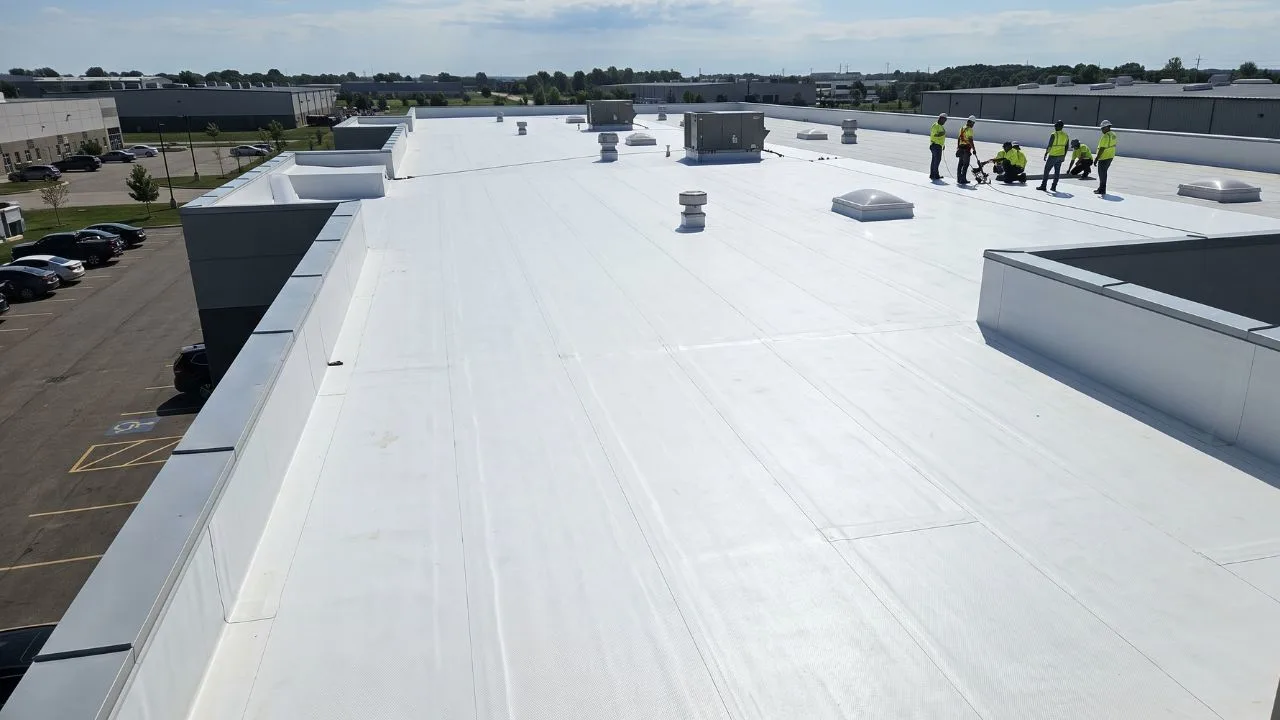
A membrane roof is a type of roofing system commonly used on flat or low-slope buildings. Unlike traditional shingles or tiles, membrane roofing consists of large sheets of waterproof material that create a continuous barrier against water infiltration.
How Membrane Roofs Work
Membrane roofing systems are designed as single-ply or multi-ply layers that are either mechanically attached, fully adhered, or ballasted to the roof deck. The primary function is to prevent water from penetrating the building structure while allowing for thermal expansion and contraction.
Types of Membrane Roofing
TPO (Thermoplastic Polyolefin)
TPO is a single-ply roofing membrane known for its heat-reflective properties. It's heat-welded at the seams, creating strong, watertight bonds. TPO is popular for its energy efficiency and relatively affordable cost.
EPDM (Ethylene Propylene Diene Monomer)
EPDM is a synthetic rubber membrane, typically black, though white versions are available. It's durable, UV-resistant, and has been used successfully for over 50 years. EPDM can be fully adhered, mechanically attached, or ballasted with stone.
PVC (Polyvinyl Chloride)
PVC membranes are highly durable and resistant to chemicals, fire, and punctures. They're heat-welded like TPO and offer excellent waterproofing. PVC tends to be more expensive but provides superior longevity.
Modified Bitumen
This is a hybrid system that combines traditional built-up roofing with modern technology. It consists of asphalt-based sheets reinforced with fiberglass or polyester, applied in multiple layers.
Installation Methods
Fully Adhered: The membrane is glued directly to the roof substrate using adhesives, providing excellent wind resistance.
Mechanically Attached: The membrane is fastened to the deck with screws and plates, then covered with another layer of membrane. This method is faster and works well on uneven surfaces.
Ballasted: The membrane is held down by heavy materials like river rock or pavers. This requires a structurally sound building capable of supporting the additional weight.
Advantages of Membrane Roofing
Membrane roofs offer several practical benefits. They're relatively quick to install compared to traditional roofing systems, reducing labor costs. The seamless design minimizes leak points, and many membranes are highly reflective, reducing cooling costs in warm climates. Most membrane systems last 20-30 years with proper maintenance, and repairs are generally straightforward when issues arise.
Disadvantages to Consider
Membrane roofing isn't suitable for pitched roofs and can be punctured by sharp objects or foot traffic. Some types, particularly EPDM, are susceptible to shrinkage over time. Installation quality is critical—poor workmanship can lead to premature failure.
Maintenance Requirements
Regular inspections should be conducted twice yearly and after severe weather. Keep the roof surface clean and free of debris, which can cause pooling water or punctures. Inspect seams and flashings for separation or damage, and address any issues immediately to prevent water infiltration.
Is Membrane Roofing Right for Your Building?
Membrane roofing is ideal for commercial buildings, warehouses, apartment complexes, and any structure with a flat or low-slope roof. When choosing a membrane type, consider your climate, budget, building structure, and expected roof lifespan.
Consulting with a qualified roofing contractor will help you determine the best membrane system for your specific needs and ensure proper installation for maximum performance and longevity.
![How Much to Paint a 2000 Square Foot House Interior? [2026 Complete Cost Guide] — Roof on BuildWise Journal](https://core.civopilot.com/storage/posts/p5dzkVu66DnWQA43WfNajYTdhBWBliwksFDE7S7b.webp)