
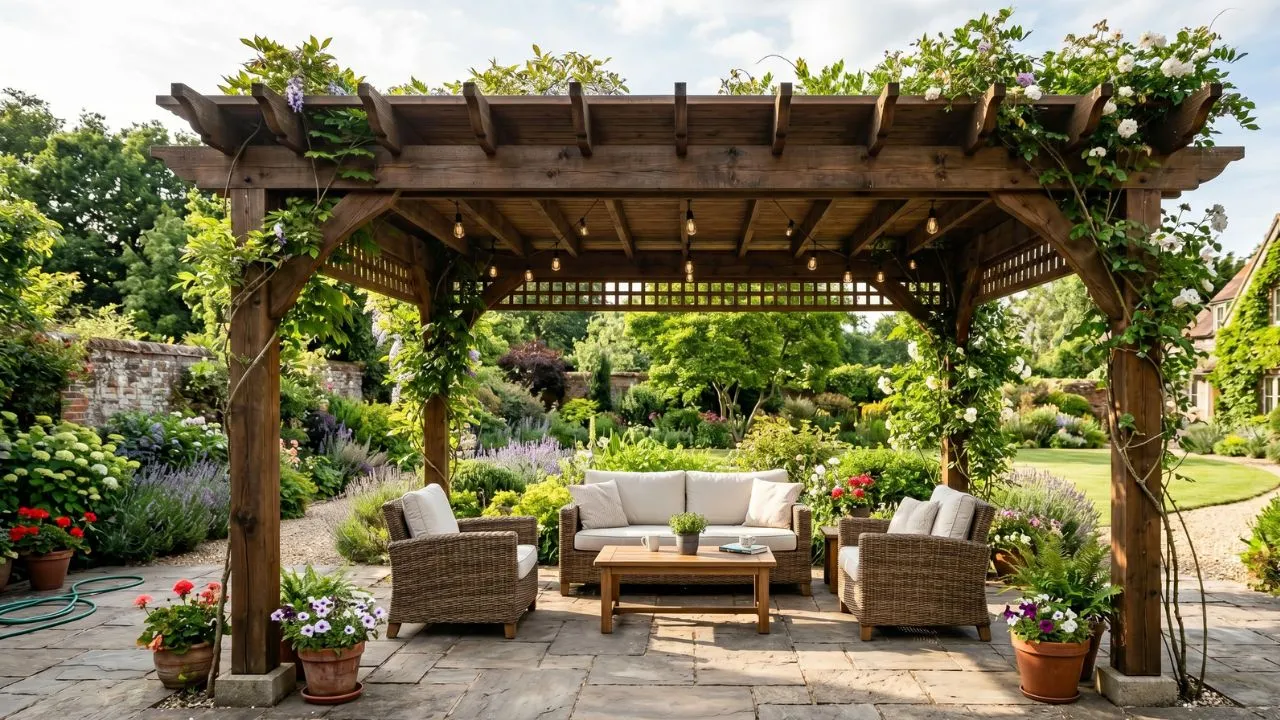
If you're planning an outdoor living space, you've probably wondered: can a pergola have a solid roof? The short answer is yes—and it might be exactly what your backyard needs.
Traditional pergolas feature open slats or beams that provide partial shade and an airy aesthetic. But modern pergolas have evolved. Solid roof pergolas combine the structural elegance of classic pergola design with complete overhead protection, creating versatile outdoor spaces that work in any weather.
Let's explore everything you need to know about solid roof pergolas, from materials and benefits to costs and design considerations.
What Exactly Is a Solid Roof Pergola?
A solid roof pergola is an outdoor structure with vertical posts supporting a completely covered roof instead of the traditional open-beam design. The roof provides full protection from sun, rain, and other elements while maintaining the open-sided character that makes pergolas appealing.
These structures blur the line between traditional pergolas and covered patios. They offer the architectural charm of a pergola with the practical functionality of a solid roof. Some people call them covered pergolas, roofed pergolas, or even hybrid structures.
The key difference from a traditional pergola is simple: instead of allowing sunlight to filter through gaps between beams, a solid roof pergola blocks weather completely overhead while keeping sides open for airflow and views.
Benefits of Choosing a Solid Roof for Your Pergola
Complete Weather Protection
The most obvious advantage is total shelter from rain, snow, and harsh sunlight. You can use your outdoor space regardless of weather conditions. Morning coffee during a drizzle? No problem. Afternoon reading session in scorching sun? Perfectly comfortable.
Extended Usability
Solid roof pergolas transform seasonal spaces into year-round outdoor rooms. You're not limited to fair-weather days. This extended usability often justifies the higher upfront cost, especially in climates with significant rainfall or intense sun exposure.
Furniture and Decor Protection
Outdoor furniture, cushions, rugs, and electronics stay dry and protected under a solid roof. You won't need to constantly move items inside or invest in heavy-duty weatherproof covers. This convenience alone saves time and extends the life of your outdoor furnishings.
Reduced Maintenance
Without rain exposure, your deck or patio surface underneath requires less frequent cleaning and maintenance. Mold, mildew, and water staining become less problematic.
Energy Efficiency Potential
When positioned against your home, a solid roof pergola can reduce direct sun exposure on exterior walls and windows, potentially lowering cooling costs during hot months.
Increased Property Value
Well-designed covered outdoor living spaces add functional square footage and visual appeal, factors that resonate with home buyers and can boost property values.
Solid Roof Material Options
Choosing the right roofing material affects durability, aesthetics, cost, and maintenance requirements. Here are the most popular options:
Polycarbonate Panels
Polycarbonate offers an excellent middle ground between full coverage and light transmission. Clear or translucent panels block rain while allowing natural light through, preventing the space from feeling too enclosed or dark. They're lightweight, impact-resistant, and relatively affordable. UV-protective coatings prevent yellowing over time. Installation is straightforward, making polycarbonate popular for DIY projects.
Metal Roofing
Aluminum and steel roofing panels provide ultimate durability and weather resistance. They come in various styles including corrugated, standing seam, and ribbed profiles. Metal roofs handle snow loads well and typically last 40-50 years with minimal maintenance. They can be noisy during rain, though insulation or ceiling additions can minimize sound. Metal roofing works particularly well in modern or industrial design aesthetics.
Shingles
Asphalt or architectural shingles create a traditional look that matches most home exteriors. They provide excellent weather protection and sound dampening. Shingle roofs require more substantial framing to support the weight, which increases structural costs. They're ideal when you want your pergola to look like a natural extension of your home's architecture.
Wood Panels or Tongue-and-Groove
Solid wood creates a warm, natural appearance but requires the most maintenance. Cedar and redwood offer natural rot resistance. Proper sealing and regular treatment are essential to prevent weather damage. Wood roofs work beautifully in rustic, craftsman, or traditional settings but demand ongoing care.
Fabric and Retractable Systems
While not permanently solid, heavy-duty waterproof fabrics stretched over frames provide rain protection with flexibility. Retractable fabric roofs let you choose between covered and open configurations. These systems work well when you want versatility, though fabric requires eventual replacement.
Solid Roof Pergola vs. Traditional Pergola
Understanding the differences helps you choose the right structure for your needs:
Light and Ambiance
Traditional pergolas with open beams create beautiful dappled light patterns and maintain an airy, open feeling. Solid roof pergolas feel more enclosed and room-like, though choosing light-transmitting materials like clear polycarbonate preserves some openness.
Weather Performance
Traditional pergolas offer minimal weather protection—partial shade but no rain defense. Solid roof versions provide complete overhead coverage while maintaining open sides for ventilation.
Cost Considerations
Traditional pergolas typically cost less due to simpler construction and fewer materials. Solid roof versions require stronger framing, additional materials, and possibly engineering, increasing costs by 30-50% or more.
Structural Requirements
Open pergolas handle wind and weather easily due to their minimal profile. Solid roofs catch wind like sails, requiring sturdier posts, deeper footings, and potentially engineered designs to meet building codes safely.
Permit and Code Issues
Traditional pergolas often fly under permitting requirements. Solid roof structures usually require building permits, inspections, and compliance with setback regulations because they're considered permanent structures.
Design Considerations for Solid Roof Pergolas
Drainage
Proper water management is critical. Your roof needs appropriate pitch (slope) to shed water effectively. Plan for gutters and downspouts to direct runoff away from the structure and surrounding areas. Poor drainage causes structural problems and turns your patio into a puddle.
Ventilation
Solid roofs trap heat without proper airflow planning. Keep sides open, consider ceiling fans, or incorporate vented panels. Good ventilation prevents the space from feeling stuffy on warm days.
Lighting
Solid roofs block natural light more than open designs. Plan for adequate artificial lighting with ambient, task, and accent options. String lights, recessed fixtures, and pendant lights all work well depending on your style.
Height and Pitch
Roof pitch affects water drainage and headroom. Steeper pitches (4:12 or higher) shed water better but may feel more enclosed. Flatter pitches maintain openness but require excellent waterproofing. Balance functional requirements with aesthetic preferences.
Integration with Home
Attached pergolas should complement your home's architecture. Match or coordinate roofing materials, colors, and design elements. Detached pergolas have more flexibility but still benefit from visual harmony with surrounding structures.
Local Building Codes
Check requirements before finalizing plans. Codes govern setbacks, height limits, materials, and structural standards. Some areas restrict solid roof structures near property lines or require engineering stamps for roofs.
Cost Expectations
Solid roof pergola costs vary significantly based on size, materials, complexity, and whether you DIY or hire contractors.
DIY Kit Installation
Basic 10x10 polycarbonate roof pergola kits start around $1,500-$3,000 for materials. These include pre-cut lumber, roofing panels, and hardware. Add another $500-$1,000 for tools, concrete footings, and finishing touches if you're starting from scratch.
Professional Installation
Contractor-built solid roof pergolas typically run $8,000-$25,000+ for average-sized structures. This includes materials, labor, permits, and often professional design. Custom designs with premium materials, electrical work, and complex features can exceed $40,000.
Material Cost Breakdown
Polycarbonate panels: $3-$8 per square foot
Metal roofing: $5-$15 per square foot
Asphalt shingles: $4-$10 per square foot
Premium materials (copper, slate, custom wood): $15-$50+ per square foot
Additional Expenses
Factor in permits ($200-$1,000), electrical work for lighting ($500-$3,000), ceiling fans ($200-$800 installed), and landscaping or patio adjustments ($500-$5,000+).
Maintenance Requirements
Solid roof pergolas need regular care to maintain appearance and performance:
Annual Inspections
Check for loose fasteners, damaged panels, cracks, and proper drainage function. Catch small issues before they become expensive problems.
Cleaning
Remove debris, leaves, and dirt from the roof surface seasonally. Clean gutters and downspouts to ensure proper water flow. Polycarbonate panels benefit from gentle washing to maintain clarity.
Sealing and Treatment
Wooden components need periodic sealing or staining. Metal roofs may require rust treatment at fastener points. Check sealant around any roof penetrations and reapply as needed.
Winter Preparation
In snowy climates, ensure your structure meets snow load requirements. Remove heavy snow accumulation if necessary, though properly engineered roofs should handle typical loads.
Is a Solid Roof Pergola Right for You?
Consider a solid roof pergola if you want:
Year-round usability of your outdoor space
Complete protection from sun and rain
To entertain outdoors regardless of weather
Reduced maintenance on outdoor furniture
A dedicated outdoor room rather than a decorative structure
Stick with a traditional open pergola if you prefer:
Lower upfront costs
Lighter, airier ambiance with dappled sunlight
Simpler installation and potentially no permits
Maximum openness to sky and elements
Primarily decorative enhancement rather than functional shelter
Final Thoughts
Can a pergola have a solid roof? Not only can it, but for many homeowners, it should. Solid roof pergolas represent the evolution of outdoor living spaces, combining classic pergola aesthetics with modern functionality.
The right choice depends on your climate, budget, intended use, and personal preferences. If you value weather protection and extended usability, the additional investment in a solid roof pays dividends through years of comfortable outdoor living.
Whether you choose polycarbonate for light transmission, metal for durability, or shingles for traditional appeal, a solid roof pergola transforms your backyard into a true outdoor room—one you'll use far more than a traditional open structure.
Start by defining your needs, checking local codes, and getting quotes from qualified contractors. Your perfect outdoor retreat might just be a solid roof pergola away.
![How Much to Paint a 2000 Square Foot House Interior? [2026 Complete Cost Guide] — Roof on BuildWise Journal](https://core.civopilot.com/storage/posts/p5dzkVu66DnWQA43WfNajYTdhBWBliwksFDE7S7b.webp)