

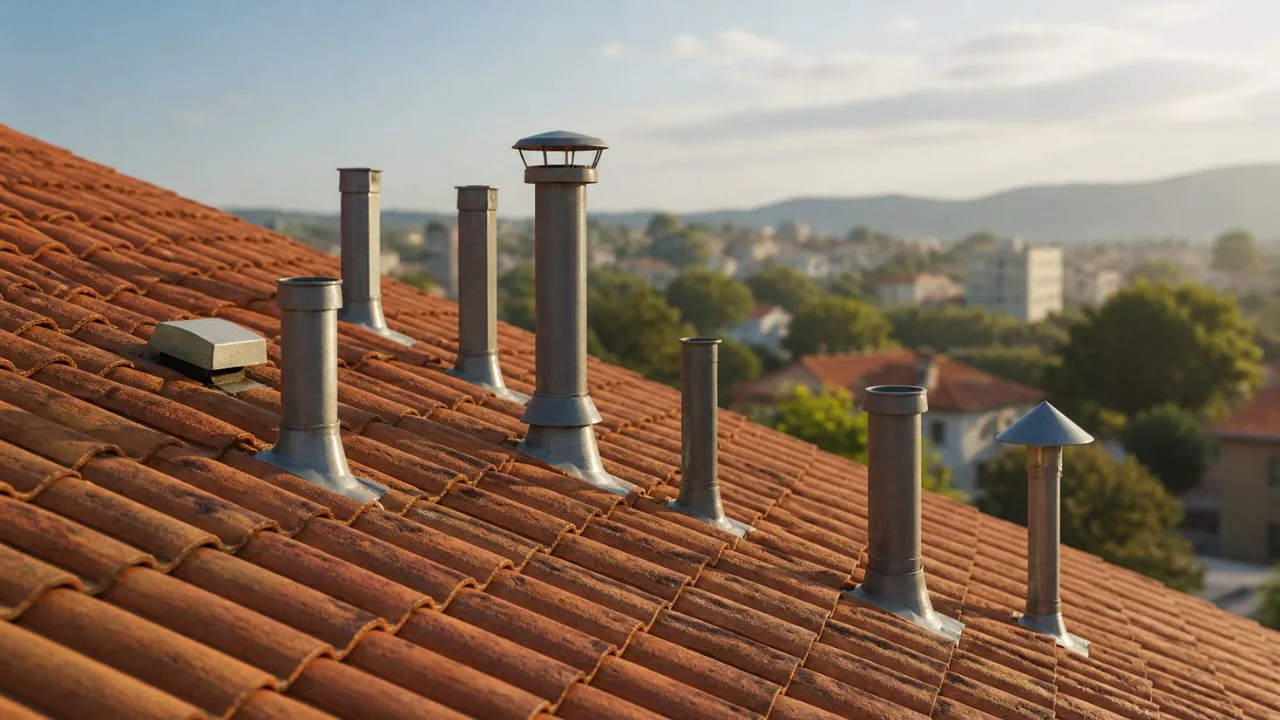
You've probably seen them poking up through rooftops all over your neighborhood. Those mysterious pipes sticking straight up out of shingles — no obvious purpose, no visible connection to anything from the outside.
Maybe you noticed one on your own roof during a walk-around. Maybe a home inspector pointed one out. Or maybe you're just genuinely curious about what that pipe is actually doing up there.
Great question. And the answer is more important than most homeowners realize.
So What Exactly Is a Roof Pipe?
That pipe sticking out of your roof is most commonly called a plumbing vent pipe — also known as a roof vent stack, vent stack, or plumbing stack.
It is a critical part of your home's plumbing system. Not your HVAC system. Not your electrical system. Your plumbing system.
Most people assume plumbing is just about water coming in and waste going out. But there's a third component that most homeowners never think about — air. And that pipe on your roof is how your plumbing breathes.
The Main Job of a Roof Pipe
Here's the simple version:
Every time water drains through your pipes — when you flush a toilet, drain a sink, run a shower — it creates a vacuum behind it. Without a way to equalize that pressure, the vacuum pulls the water right out of your drain traps.
Those drain traps — the U-shaped curves under every sink and toilet — hold a small amount of water at all times. That water acts as a barrier that blocks sewer gases from coming up through your drains and into your home.
If the vacuum pulls that water out of the trap — your home is now directly connected to the sewer system. And sewer gases — including hydrogen sulfide, methane, and ammonia — start coming up through your drains.
The roof pipe prevents all of that from happening.
It allows fresh air into the plumbing system to equalize pressure every time water drains. No vacuum. No siphoning of the trap water. No sewer gases in your home.
In short — the roof pipe keeps your home smelling like a home and not a sewer.
The Technical Name and How It Works
The proper name for this system is the Drain-Waste-Vent system — commonly called a DWV system.
Every home has one. It consists of three interconnected parts:
Drain pipes — carry wastewater away from fixtures like sinks, toilets, and showers toward the main sewer line.
Waste pipes — carry solid waste and toilet water to the sewer.
Vent pipes — carry air into the system and carry sewer gases safely out above the roofline.
The vent pipe on your roof is the exit point for the entire vent side of this system. It connects to a network of vent pipes inside your walls that run alongside every drain pipe in the house. All of those interior vent pipes connect to the main stack — which is the large vertical pipe that runs from your basement all the way up through the roof.
What Happens If the Roof Pipe Stops Working?
This is where things get real. A blocked or damaged roof vent pipe causes a cascade of problems throughout your home's plumbing.
Slow or Gurgling Drains
This is usually the first sign something is wrong. When the vent pipe is blocked, air can't enter the system properly. Drains become sluggish and you hear a distinctive gurgling sound as water tries to pull air through the trap instead of through the vent.
That gurgling noise is your plumbing telling you something is wrong. Don't ignore it.
Sewer Gas Smell Inside the Home
If the vent is blocked badly enough, the pressure imbalance siphons the water out of your drain traps. With the trap water gone, there's nothing stopping sewer gases from coming straight up through your drains.
You'll notice it as a rotten egg smell — that's hydrogen sulfide — or a general sewage odor coming from drains even when they haven't been used recently.
This is more than just unpleasant. Sewer gas contains methane which is flammable and hydrogen sulfide which is toxic in high concentrations. A persistent sewer smell in the home is a genuine health and safety concern that needs immediate attention.
Toilet Bubbling
Another telltale sign of a blocked vent pipe — your toilet bubbles or gurgles when you flush another drain nearby. The air pressure imbalance forces air through whatever path it can find — and sometimes that path is up through the toilet bowl.
Multiple Slow Drains Simultaneously
If just one drain is slow, the problem is usually a clog in that specific drain line. But if multiple drains in different parts of the house are all slow at the same time — that points to a vent pipe issue affecting the whole system.
What Can Block a Roof Pipe?
Roof vent pipes are open at the top — which means they're exposed to everything nature throws at them. Here's what commonly causes blockages:
Bird Nests
Birds love the opening of a vent pipe. It's warm air rising from inside the house — right at their level — and it looks like an ideal nesting spot. A nest built inside or just over a vent pipe can block airflow almost completely.
Leaves and Debris
Leaves, twigs, and other debris blown by the wind can accumulate around or inside the vent opening. In fall especially, this is a common problem for homeowners with trees near the roofline.
Ice Caps in Winter
In cold climates, the warm moist air rising from the plumbing system meets the cold outside air at the top of the vent pipe. This can cause ice to form around — and eventually over — the vent opening. A fully iced-over vent pipe in a cold snap causes exactly the same problems as any other blockage.
This is why in very cold climates, vent pipes are sometimes insulated or given wider diameter openings to reduce the chance of ice buildup.
Dead Animals
Smaller animals — squirrels, mice — occasionally fall into vent pipes and become lodged. This is more common than people expect and causes a complete blockage.
Deteriorated Vent Boot
The rubber or lead boot that seals the pipe where it exits the roof can crack and deteriorate over time. While this primarily causes a leak around the pipe rather than a blockage, it can also allow debris and pests to enter more easily.
Are There Different Types of Roof Pipes?
Yes. Not every pipe on your roof is a plumbing vent. Here's a quick guide to the different pipes and protrusions you might see:
Plumbing Vent Stack
The most common roof pipe. Typically 3 to 4 inches in diameter. Made of PVC, ABS plastic, or cast iron in older homes. Sticks straight up from the roof surface. This is the one we've been talking about throughout this article.
Soil Stack
Similar to the vent stack but specifically carries waste from toilets. In many homes the soil stack and vent stack are the same pipe — a single large stack that handles both functions.
HVAC Flue Pipe
If your home has a gas furnace, boiler, or water heater, it has a flue pipe that exhausts combustion gases through the roof. These are typically metal — galvanized steel or stainless — and may have a cap or hood on top.
This is completely separate from the plumbing vent system. Confusing the two is a common mistake.
Exhaust Vents
Bathroom fans, kitchen range hoods, and dryer vents often exhaust through the roof or through exterior walls. These are typically smaller — 3 to 4 inches — and may have a flap or damper that opens when the fan runs.
Chimney
If your home has a fireplace or wood stove, the chimney protrudes through the roof. While technically a different structure than a pipe, homeowners sometimes confuse chimneys with flue pipes when looking at the roofline.
Attic Ventilation
Some homes have roof vents specifically for attic ventilation — ridge vents, box vents, or turbine vents. These are not connected to the plumbing system. Their job is to allow hot air to escape the attic in summer and prevent moisture buildup in winter.
How Many Roof Pipes Should a Home Have?
It depends on the size and layout of your home and how the plumbing is configured.
A small single-story home might have just one vent stack. A larger two-story home with multiple bathrooms, a kitchen, and a laundry room might have two, three, or more vent pipes — or one main stack with several secondary vents branching off it.
In modern plumbing design, the trend is toward connecting all secondary vents to a single main stack rather than having multiple pipes penetrating the roof. Fewer roof penetrations means fewer potential leak points.
If you're not sure how many vent pipes your home should have, a licensed plumber can assess your system.
The Roof Boot — What It Is and Why It Matters
You can't talk about roof vent pipes without mentioning the roof boot — also called a pipe boot, pipe flashing, or vent boot.
The roof boot is the seal around the base of the vent pipe where it exits through the roof. Its job is to prevent water from getting under the shingles and into the roof deck around the pipe.
It's a small but critical component. And it's one of the most common sources of roof leaks in residential homes.
What Roof Boots Are Made Of
Rubber neoprene boots — The most common type. A rubber collar forms a tight seal around the pipe. Over time — usually 10 to 15 years — rubber degrades, cracks, and shrinks. A cracked boot is an open invitation for water infiltration.
Lead boots — Traditional and very durable. Lead is malleable and conforms perfectly around the pipe. Lead boots can last 50 years or more but are less common in new construction due to cost and environmental concerns.
Aluminum or galvanized steel — Metal flashing around the base of the pipe provides durability. Used in combination with a rubber seal in many modern installations.
EPDM rubber — A more modern synthetic rubber that handles UV exposure and temperature extremes better than traditional neoprene.
Signs Your Roof Boot Is Failing
Water stains on the ceiling near the roof pipe location inside the home
Visible cracks or gaps in the rubber boot on the roof
The rubber has separated from the pipe — leaving a visible gap
The boot looks compressed, sunken, or deteriorated when viewed from the roof
Granules from nearby shingles have accumulated inside the boot collar
Replacing a worn roof boot is a relatively inexpensive repair — typically $150 to $500 depending on your location and roofing contractor. It's one of the most cost-effective preventive maintenance items you can address on a roof.
Ignoring a failing boot leads to water getting into the roof deck — causing rot, mold, structural damage, and eventually much more expensive repairs.
How to Inspect Your Roof Pipe
You don't need to be a roofing expert to do a basic check on your roof vent pipe. Here's what to look for:
From the Ground
Use binoculars if needed. Look for:
Visible cracks or gaps at the base of the pipe
Boot that looks compressed, sunken, or separated from the pipe
Debris or bird nests around the pipe opening
Ice buildup around the opening in winter
From Inside the Attic
With a flashlight, inspect where the vent pipe passes through the attic:
Look for water stains on the roof decking around the pipe
Check for daylight visible around the pipe — a gap means potential water and pest entry
Look for mold or rot on the wood near the pipe
From the Roof (If Safe to Do So)
If your roof pitch is walkable and you're comfortable doing so:
Check the boot closely for cracks and separation
Look into the pipe opening for visible blockages — leaves, nests
Check that shingles around the pipe are properly sealed and laying flat
If you're not comfortable on the roof — and that's completely reasonable — a roofing contractor or plumber can inspect both the boot and the pipe opening for you.
When to Call a Plumber vs. a Roofer
This creates confusion for a lot of homeowners because the vent pipe involves both plumbing and roofing.
Call a plumber when:
You're experiencing slow drains or gurgling sounds
You smell sewer gas inside the home
You need the vent pipe cleared of a blockage from the inside
You're adding new plumbing fixtures and need to extend the vent system
Call a roofer when:
The boot around the pipe is cracked or failing
You have a water leak around the pipe
You need the pipe opening cleared of exterior debris or a bird nest
The pipe itself is damaged or improperly installed at the roof level
Sometimes you need both. A failing boot might cause water to get into the attic, which might cause moisture to affect the vent pipe. A full inspection by both trades ensures nothing gets missed.
How Much Does Roof Pipe Repair or Replacement Cost?
Here's a quick cost guide for common roof pipe related repairs:
Repair Type | USA Cost | UK Cost | Canada Cost |
|---|---|---|---|
Replace rubber boot / flashing | $150 – $500 USD | £100 – £350 GBP | $175 – $600 CAD |
Clear blocked vent pipe | $100 – $300 USD | £80 – £250 GBP | $120 – $350 CAD |
Replace damaged vent pipe section | $200 – $600 USD | £150 – £450 GBP | $250 – $700 CAD |
Full vent stack replacement | $500 – $2,000 USD | £400 – £1,500 GBP | $600 – $2,500 CAD |
Add new vent pipe (new construction) | $300 – $1,500 USD | £250 – £1,200 GBP | $350 – $1,800 CAD |
These are estimates. Prices vary by location, contractor, and the complexity of access to the pipe.
Can You Add a Vent Without Going Through the Roof?
Yes — and this is increasingly popular in home renovation situations where cutting a new hole through the roof isn't practical.
Air admittance valves (AAVs) — also called studor vents — are mechanical one-way valves that allow air into the plumbing system without needing a pipe to exit through the roof. They open when negative pressure is created by draining water and close when the pressure equalizes — preventing sewer gases from escaping.
AAVs are widely accepted by modern plumbing codes across the US, UK, and Canada — though rules on where and how they can be used vary by jurisdiction. They're commonly used under kitchen islands, in basement bathrooms, or in home additions where running a new vent to the roof would be difficult.
They're not a universal replacement for a roof vent stack — the main stack still needs to vent to outside air. But for individual fixtures or secondary vents, AAVs are a practical and code-compliant solution.
Maintenance Tips for Your Roof Vent Pipe
Keeping your roof vent pipe in good shape doesn't take much effort. Here's a simple maintenance checklist:
Annually:
Visually inspect the boot from the ground with binoculars
Check for debris buildup around the pipe opening
Look for water stains in the attic near the pipe
After major storms:
Check that no debris has been blown into the pipe opening
Look for any displacement of the boot or flashing
In winter (cold climates):
Watch for ice buildup around the pipe opening after cold snaps
If gurgling or slow drains develop suddenly in winter — ice blockage is a likely cause
Every 5 to 10 years:
Have a roofer inspect and potentially replace the pipe boot — especially if it's the original rubber boot
Have a plumber check the condition of the vent stack inside the walls if you're experiencing recurring drain issues
Bottom Line
That pipe sticking out of your roof might look like a minor afterthought — but it's doing a critically important job every single day. It keeps your drain system flowing properly, your trap seals intact, and toxic sewer gases out of your living space.
Without it working correctly, you'd know pretty quickly. Gurgling drains, slow sinks, and a house that smells like a sewer are hard to ignore.
The good news is that roof vent pipes are simple, durable, and low maintenance. A basic annual inspection and timely replacement of the rubber boot are all most homeowners ever need to keep things working perfectly.
Now that you know what that pipe does — give it a little respect. It's working harder than it looks.


![How Much to Paint a 2000 Square Foot House Interior? [2026 Complete Cost Guide] — Roof on BuildWise Journal](https://core.civopilot.com/storage/posts/p5dzkVu66DnWQA43WfNajYTdhBWBliwksFDE7S7b.webp)