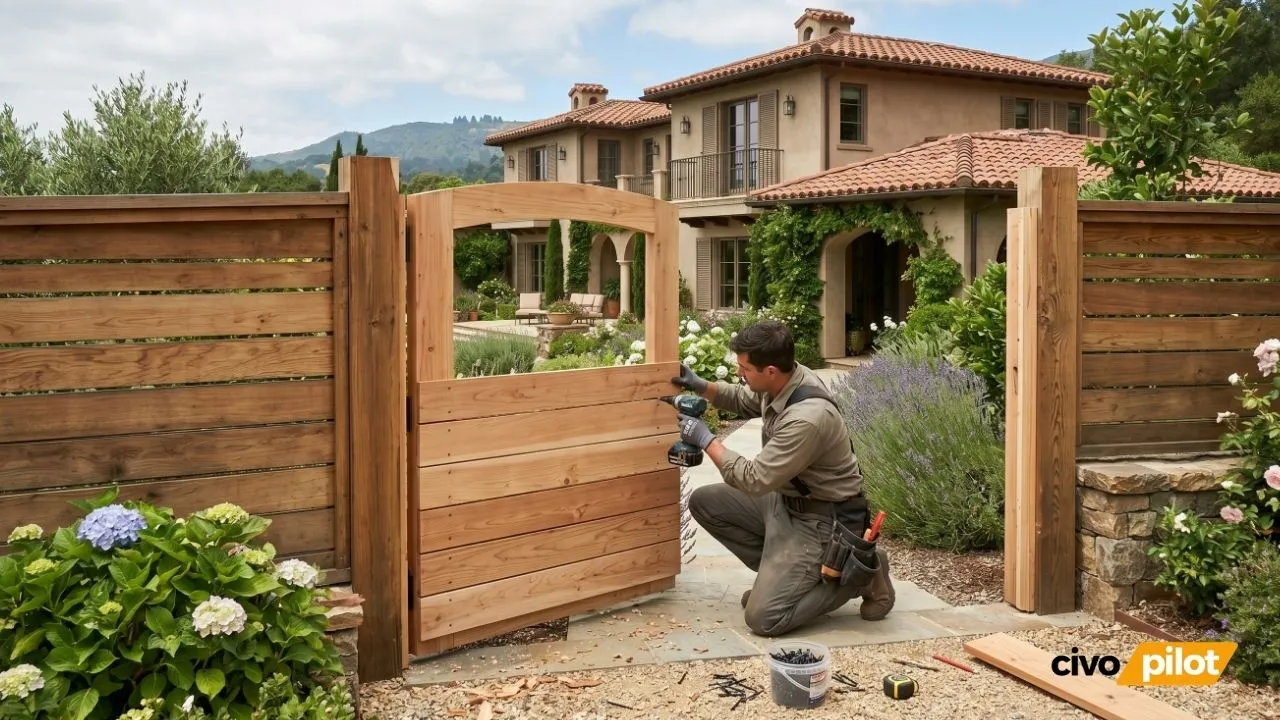


When planning a fence project, you'll constantly hear the term "linear foot" in quotes and estimates. But what is a linear foot in fencing, and why does it matter? Understanding this fundamental measurement concept helps you accurately budget your project, compare quotes, and avoid costly miscalculations.
A linear foot is simply a straight-line measurement of length—one foot measured in a single direction. In fencing, it represents the total distance your fence will span, regardless of height, style, or materials used. Let's break down everything you need to know about calculating and using linear feet for fence projects.
Understanding Linear Feet: The Basics
A linear foot (often abbreviated as "lin ft" or "LF") measures length only, without considering width, height, or area. Think of it as tracing a line along the ground where your fence will stand.
Linear Foot vs. Square Foot
The difference between linear feet and square feet often confuses homeowners:
Linear foot: One-dimensional measurement of length
Measures: Length only
Used for: Fencing, trim, rope, lumber
Symbol: ft or LF
Square foot: Two-dimensional measurement of area
Measures: Length × Width
Used for: Flooring, paint coverage, room size
Symbol: ft² or sq ft
For fencing, contractors primarily use linear feet because they're measuring the perimeter distance, not the total surface area of the fence panels (though that sometimes comes into play for material calculations).
The Basic Linear Foot Formula for Fencing
Calculating linear feet for fencing depends on your property's shape. Here are the essential formulas:
For Rectangular Properties
The formula for a complete perimeter fence around a rectangular property:
Formula:
Where:
L = Length of the property
W = Width of the property
Alternative formula:
For Single Fence Runs
If you're fencing just one side or a specific section:
Formula:
For L-Shaped or Irregular Properties
Add all individual fence sections:
Formula:
Where S₁, S₂, S₃, ... represent each fence section length.
Practical Examples: Calculating Linear Feet
Let's work through real-world scenarios to make this crystal clear.
Example 1: Backyard Rectangular Fence
Scenario: You want to fence your backyard, which measures 50 feet wide by 30 feet deep.
Solution:
Using the perimeter formula:
Substituting values:
Answer: You need 160 linear feet of fencing material.
Cost calculation: If fencing costs $25 per linear foot:
Example 2: Three-Sided Fence (Leaving Front Open)
Scenario: Your backyard is 60 feet wide and 40 feet deep. You want to fence three sides, leaving the side facing the house open.
Solution:
Answer: You need 160 linear feet of fencing (even though it's the same number as Example 1, the shape is different).
Example 3: L-Shaped Property
Scenario: You have an L-shaped yard with the following sections:
Section 1: 45 feet
Section 2: 30 feet
Section 3: 20 feet
Section 4: 15 feet
Section 5: 25 feet
Section 6: 45 feet
Solution:
Answer: You need 180 linear feet of fencing.
Example 4: Corner Property with Existing Fence
Scenario: Your rectangular corner lot is 80 feet × 60 feet, but one 80-foot side already has a fence you're keeping.
Solution:
Full perimeter would be:
Subtract the existing fence:
Answer: You need 200 linear feet of new fencing.
Accounting for Gates in Linear Foot Calculations
Gates complicate linear foot calculations because they're typically priced separately but occupy fence space.
Method 1: Include Gates in Linear Footage
Calculate total perimeter, then subtract gate widths from fence material but add gate costs separately:
Example: 150-foot perimeter with one 4-foot gate and one 10-foot gate:
Then add gate costs separately to your budget.
Method 2: Count Gates as Linear Footage
Some contractors include gate linear footage in the total quote, simplifying calculations:
Always clarify with your contractor which method they're using in their quote.
Converting Linear Feet to Other Measurements
Sometimes you'll need to convert between measurement units:
Linear Feet to Yards
Example: 180 linear feet =
Linear Feet to Meters (International Conversion)
Example: 100 linear feet =
Total Fence Material Calculation
To calculate total board feet (volume of lumber needed):
Example: 6-foot tall fence, 160 linear feet, using 1-inch thick boards:
Advanced Calculations for Fence Components
Calculating Number of Posts Needed
Posts typically space 6-8 feet apart. The formula:
Example: 120 linear feet with posts every 8 feet:
The "+1" accounts for the final post at the end of your fence run.
Calculating Fence Panels Needed
For pre-made panels:
Example: 150 linear feet using 8-foot wide panels:
Always round up to ensure you have enough material.
Calculating Concrete for Posts
For post holes:
Where:
r = radius of hole (in feet)
h = depth of hole (in feet)
π ≈ 3.14159
Example: 10-inch diameter holes, 2 feet deep, 16 posts:
Convert to bags (typically 0.6 cubic feet per 60-pound bag):
How Contractors Price Fencing by Linear Foot
Understanding linear foot pricing helps you evaluate quotes and budget accurately.
Standard Pricing Structure
Most fence contractors quote prices per linear foot, which includes:
Materials (posts, boards, rails)
Labor (installation, post setting)
Basic hardware (nails, screws)
Example: 180 linear feet at $28 per linear foot:
Additional Costs Beyond Linear Feet
Not everything prices by linear foot:
Gates: Usually priced individually ($200-$800 each)
Corner posts: Sometimes charged separately ($50-$150 each)
Excavation: May incur extra charges for rocky or difficult soil
Permits: Fixed costs regardless of fence length
Removal: Old fence removal often priced by linear foot separately
Complete Budget Formula
Example calculation:
200 linear feet × $30/LF = $6,000
Two gates @ $400 each = $800
Permit = $150
10% contingency = $695
Common Mistakes When Calculating Linear Feet
Avoid these frequent errors:
Mistake 1: Measuring Area Instead of Perimeter
Wrong: Calculating 50 ft × 40 ft = 2,000 sq ft
Right: Calculating 2(50 + 40) = 180 linear feet
Mistake 2: Forgetting the Fourth Side
When fencing a rectangular yard, all four sides count (unless one side has an existing fence or structure).
Mistake 3: Not Accounting for Property Irregularities
Real properties rarely form perfect rectangles. Always:
Walk the actual fence line
Measure each section individually
Account for curves, angles, and obstacles
Mistake 4: Confusing Linear Feet with Board Feet
Linear feet: Length of fence run
Board feet: Volume of lumber (length × width × thickness)
Mistake 5: Ignoring Slope and Terrain
Sloped ground requires more fencing than flat terrain for the same horizontal distance:
Where θ = slope angle
Example: 100 feet horizontal distance on a 20° slope:
Tools for Measuring Linear Feet
Manual Measuring Tools
Measuring tape: Essential for straight runs and small properties
Measuring wheel: Rolling wheel that counts distance as you walk—ideal for large properties
String and stakes: Mark fence lines, then measure with tape
Digital Tools
Smartphone apps: GPS-based measuring apps calculate perimeter from satellite imagery
Laser distance measurers: Highly accurate for straight-line measurements
Google Earth/Maps: Estimate linear feet before on-site measurement
Professional Survey
For expensive projects or property-line disputes, professional surveys provide legal accuracy and prevent costly mistakes.
Practical Tips for Accurate Linear Foot Measurement
Add 5-10% buffer: Account for waste, cuts, and mistakes
Measure twice: Verify all measurements before ordering materials
Document everything: Sketch your property with labeled measurements
Check local regulations: Setback requirements may reduce usable perimeter
Consider obstacles: Trees, utilities, and structures affect fence routing
Plan for access: Ensure material delivery and equipment can reach work areas
When Linear Feet Don't Tell the Whole Story
While linear feet drive most fence costs, other factors significantly impact your project:
Height Variations
Taller fences cost more per linear foot due to additional materials and labor. A 6-foot fence might cost $25/LF while an 8-foot fence costs $35/LF for the same horizontal distance.
Style Complexity
Decorative patterns, lattice tops, or custom designs increase per-linear-foot costs even though the length remains constant.
Material Quality
Premium cedar costs more per linear foot than standard pine, even when both span the same distance.
Site Accessibility
Difficult-to-reach locations increase labor costs per linear foot.
The Bottom Line on Linear Feet in Fencing
What is a linear foot in fencing? It's the fundamental measurement that determines your project's scope and cost—simply the total distance your fence will span, measured in feet. Whether you're calculating material needs, comparing contractor quotes, or budgeting your project, accurate linear foot measurement forms the foundation of successful fence installation.
Master the basic formula for your property shape, account for gates and obstacles, add a reasonable buffer for waste, and you'll have the knowledge to plan your fence project with confidence. Remember that while linear feet provide the baseline measurement, total costs depend on height, materials, style, and site conditions—but it all starts with knowing exactly how many linear feet you need.