
Introduction
It's one of the most Googled flooring questions homeowners ask: can you use bleach on vinyl floors? You've got a stubborn stain, a pet accident, or a floor that just won't come clean with regular mopping — and the bleach bottle is right there under the sink. It seems like the obvious solution.
But before you pour, spray, or mop bleach onto your vinyl floors, there's critical information you need to know. The answer isn't a simple yes or no — it depends on your floor type, the concentration of bleach, how long it stays on, and what your manufacturer recommends. Get it wrong and you could be looking at dull, discolored, or peeling floors that need expensive replacement.
This guide covers everything: the risks, the right method if you absolutely must use bleach, and the safer alternatives that will keep your vinyl floors spotless without the damage.
Understanding Vinyl Floors: Not All Vinyl Is the Same
Before addressing the bleach question, it's important to understand that "vinyl floor" is an umbrella term covering several different products — and each reacts to bleach differently.
Vinyl comes in sheet form, vinyl composition tile (VCT), and luxury vinyl plank (LVP), each with different wear layers and finishes.
Types of Vinyl Flooring
Sheet Vinyl
Comes in large rolls installed as a continuous surface. It often has a protective wear layer, but repeated exposure to strong cleaners can still fade patterns.
Luxury Vinyl Plank (LVP) / Luxury Vinyl Tile (LVT)
The most popular choice in modern homes. These are designed to mimic natural materials and include a protective wear layer that resists scratches, stains, and scuffs.
Vinyl Composition Tile (VCT)
Made from limestone, fillers, thermoplastic binder, and pigments. It is more porous and requires polishing, making it more vulnerable to chemical damage.
Knowing your floor type is essential before deciding how to clean it.
So, Can You Use Bleach on Vinyl Floors?
The short answer is: technically yes — but only in very limited situations and with extreme caution.
While bleach is a powerful disinfectant, most flooring manufacturers advise against using it on vinyl floors. Instead, they recommend mild cleaners or pH-neutral solutions for regular cleaning.
This warning exists for a reason—bleach can cause serious damage.
What Bleach Does to Vinyl Floors
Bleach is a strong chemical that reacts with the surface of vinyl flooring and can cause multiple types of damage.
Wear Layer Breakdown
Bleach can damage the protective top layer, leading to dullness and surface deterioration. Once this layer is damaged, it cannot be repaired.
Discoloration and Fading
Bleach can lighten or yellow the surface, especially on colored or patterned floors.
Seam Damage and Lifting
Bleach can seep into seams, weakening adhesives and causing planks or tiles to lift.
Peeling and Brittleness
Over time, bleach can break down the material, causing peeling and flaking.
Loss of Shine
One of the first visible effects is a dull, chalky finish.
Warranty Issues
Using harsh chemicals like bleach may void your floor’s warranty.
When Is Bleach Acceptable?
Bleach should only be used in emergency situations, such as:
After flooding
Sewage backups
Severe pet contamination
Mold or mildew issues
Even then, it should not be used as a regular cleaner.
How to Use Bleach Safely on Vinyl Floors
If bleach is absolutely necessary, follow these steps carefully.
Step 1: Proper Dilution
Use a heavily diluted solution. Never apply bleach directly.
Step 2: Test First
Always test in a hidden area and wait 24 hours.
Step 3: Apply Carefully
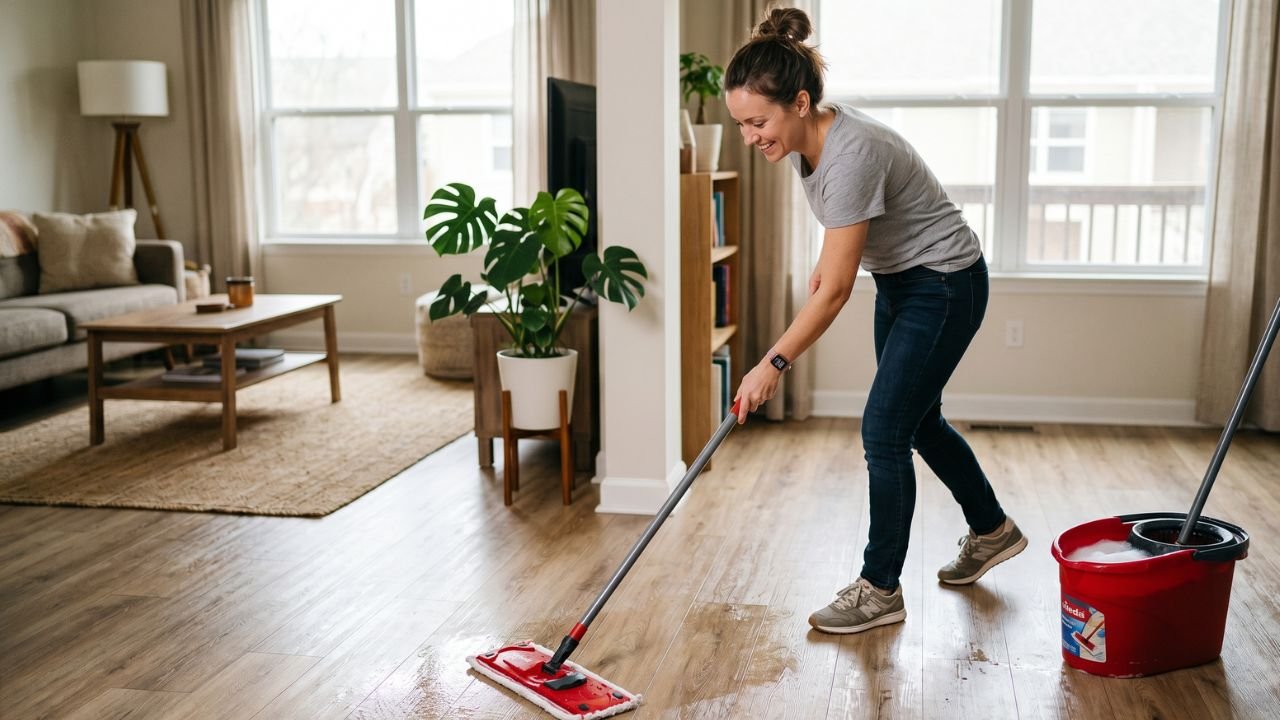
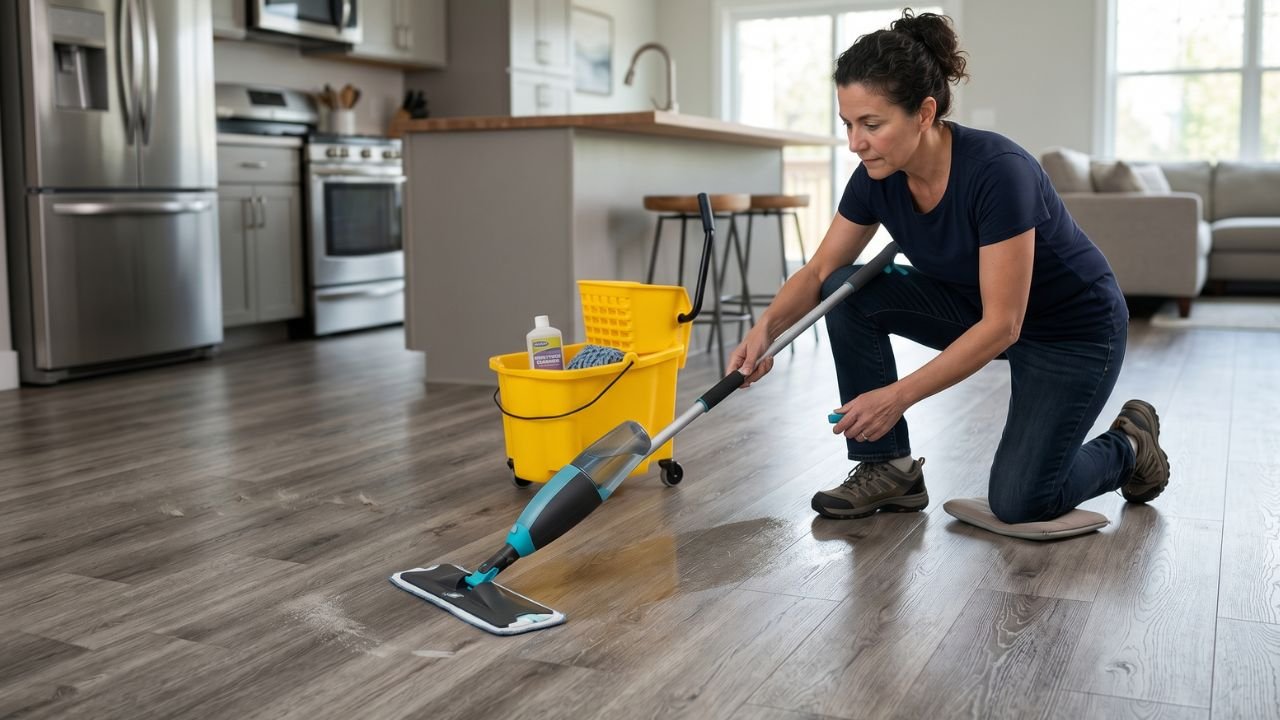
Use a damp cloth or mop. Avoid soaking the floor and limit contact time.
Step 4: Ventilation
Ensure proper airflow and wear gloves while cleaning.
Step 5: Rinse Thoroughly
Clean the surface with plain water after using bleach.
Step 6: Dry Completely
Remove all moisture to prevent damage to seams.
Safety Warning
Never mix bleach with ammonia, vinegar, or other cleaners. This can produce dangerous gases.
Best Bleach-Free Alternatives
For regular cleaning, these options are safer and just as effective.
Warm Water and Dish Soap
Simple, safe, and effective for daily cleaning.
White Vinegar Solution
Good for removing odors and light disinfection when diluted properly.
Commercial Vinyl Cleaners
Use products specifically designed for vinyl floors.
Isopropyl Alcohol
Effective for spot cleaning and disinfecting small areas.
Hydrogen Peroxide
A gentler option for stain removal and sanitation.
What to Avoid on Vinyl Floors
Product Type | Why to Avoid |
|---|---|
Undiluted bleach | Causes damage and discoloration |
Ammonia-based cleaners | Breaks down surface finish |
Steam mops | Damages adhesive and seams |
Abrasive scrubbers | Scratches the surface |
Wax-based polishes | Causes buildup |
Oil-based soaps | Leaves residue |
Strong acidic cleaners | Reacts with protective layer |
Vinyl Floor Maintenance Tips
Maintaining vinyl floors is simple with regular care.
Use mats at entry points
Add felt pads under furniture
Clean spills immediately
Avoid dragging heavy items
Sweep or vacuum regularly
Mop weekly with mild cleaner
Consistent gentle cleaning works better than harsh chemicals.
What If You Already Used Bleach?
If bleach has already been used:
Stop using it immediately
Rinse the area thoroughly
Check for discoloration or damage
Consult a professional if needed
Review warranty terms
In some cases, damaged planks can be replaced individually.
Key Takeaways
Bleach is not recommended for regular vinyl floor cleaning
If used, it must be heavily diluted
Never use full-strength bleach
Always test before applying
Avoid mixing bleach with other cleaners
Use safer alternatives for routine cleaning
Reserve bleach only for emergency situations
Conclusion
So, can you use bleach on vinyl floors? Only in rare emergency situations and with extreme caution.
For everyday cleaning, bleach is more likely to damage your floor than help it. The better approach is regular maintenance with gentle cleaners, which keeps your floors looking new without any risk.
Protect your flooring investment by avoiding harsh chemicals and sticking to safe, proven cleaning methods.