
You've got vinyl floors and a bottle of Murphy's Oil Soap sitting under your sink. It smells great, it's been around forever, and your mom probably used it on everything. So naturally the question comes up — can you just use it on your vinyl floors too?
It seems like a simple yes or no question. But the answer is a little more nuanced than that — and getting it wrong could actually damage your floors over time.
Let's get into it.
What Is Murphy's Oil Soap?
Before we answer the main question, it helps to understand what Murphy's Oil Soap actually is.
Murphy's Oil Soap is a plant-based cleaning product made primarily from vegetable oil — specifically refined coconut oil. It's been around since 1910 and was originally designed for cleaning wood surfaces — hardwood floors, wood furniture, wood cabinets, and wood paneling.
The formula is pH-balanced and gentle. It cuts through grease and grime effectively without harsh chemicals. That's why it became a household staple for generations of homeowners.
The key word there is wood. Murphy's Oil Soap was formulated for wood. Not vinyl.
So Can You Use It on Vinyl Floors?
Here's the direct answer:
Technically yes — but most flooring experts and vinyl manufacturers strongly recommend against it.
Murphy's Oil Soap won't immediately destroy your vinyl floors. If you've used it a few times already, don't panic. But using it regularly as your go-to vinyl floor cleaner is a bad idea, and here's exactly why.
Why Murphy's Oil Soap Is Not Recommended for Vinyl Floors
1. It Leaves an Oily Residue
This is the biggest problem. Murphy's Oil Soap contains — as the name suggests — oil. On wood, that oil soaks into the grain and conditions the surface. On vinyl, there's nowhere for it to go.
Vinyl is non-porous. It doesn't absorb anything. So the oil just sits on top of the wear layer and builds up over time. The result is a dull, greasy film that makes your floors look cloudy and feel slippery.
That residue is also a magnet for dirt and dust. Instead of lifting grime off the floor, you end up with a sticky layer that attracts more of it. Your floors start looking dirty faster — even right after you mop.
2. It Can Dull the Finish
Quality vinyl tile and luxury vinyl plank flooring have a protective wear layer on top — sometimes with an additional urethane coating. This layer is what gives the floor its sheen and protects it from scratches and stains.
The oil-based formula in Murphy's Oil Soap can gradually break down that protective coating. Over time, with repeated use, your floors lose their luster and start looking flat and worn — even if the floor itself is in good condition structurally.
3. It Can Void Your Warranty
This one surprises a lot of people. Most vinyl flooring manufacturers — including major brands like Shaw, COREtec, Armstrong, and LifeProof — specify in their care instructions that you should only use pH-neutral vinyl floor cleaners on their products.
Using the wrong cleaner, including oil-based soaps, can actually void your floor warranty. If you later need to make a warranty claim for peeling, delamination, or finish issues, the manufacturer may deny it if they determine the wrong cleaning products were used.
Always check your flooring manufacturer's care guide before reaching for any cleaner.
4. It Creates a Slip Hazard
That oily residue we talked about? It doesn't just look bad. It makes the floor slippery — especially when wet. This is a real safety concern, particularly in bathrooms and kitchens where floors get wet regularly.
A floor that feels slick underfoot is a fall hazard. This is especially concerning in homes with young children or elderly family members.
5. It's Hard to Remove Once It Builds Up
Here's the frustrating part — once that oily residue builds up through repeated use, it's genuinely difficult to remove. You can't just mop it away with water. You need a dedicated floor cleaner designed to cut through soap and oil buildup, and even then it may take multiple cleanings to fully restore the floor's appearance.
Prevention is much easier than the fix.
What the Research and Experts Say
Flooring industry research consistently points to the same conclusion — oil-based and soap-based cleaners are not compatible with vinyl flooring surfaces.
The National Wood Flooring Association (NWFA) and leading vinyl flooring manufacturers all emphasize using cleaners that are specifically pH-neutral and residue-free for hard surface floors. Studies on vinyl wear layer degradation show that prolonged exposure to oil-based compounds accelerates the breakdown of urethane and aluminum oxide coatings — the very layers that protect vinyl from everyday damage.
Independent flooring experts and certified flooring installers widely agree that the number one cause of premature finish failure on luxury vinyl tile and luxury vinyl plank is improper cleaning products — with oil soaps and wax-based cleaners being the most common culprits.
Consumer testing has also shown that floors cleaned regularly with oil soap develop measurably higher surface friction variation — meaning they become inconsistently slippery — compared to floors maintained with pH-neutral cleaners.
The bottom line from the research is consistent: Murphy's Oil Soap is a great product. Just not for vinyl floors.
What About Using It Just Once or Occasionally?
If you used Murphy's Oil Soap on your vinyl floor once or twice, you're probably fine. A single use isn't going to ruin your floors.
The problems develop with regular, repeated use over time. The residue builds up gradually. The finish dulls slowly. You might not notice it happening until the damage is already done.
So if you've used it a couple of times — clean the floor thoroughly with a proper vinyl floor cleaner to remove any residue and switch products going forward. You should be in good shape.
How to Remove Murphy's Oil Soap Buildup From Vinyl Floors
Already been using it for a while? Here's how to tackle the buildup:
What you'll need:
White vinegar
Warm water
A few drops of dish soap
A microfiber mop
A bucket
Steps:
Step 1 — Mix your cleaning solution. Combine one cup of white vinegar with one gallon of warm water. Add just two or three drops of dish soap. The vinegar cuts through the oily residue and the small amount of dish soap helps lift the buildup.
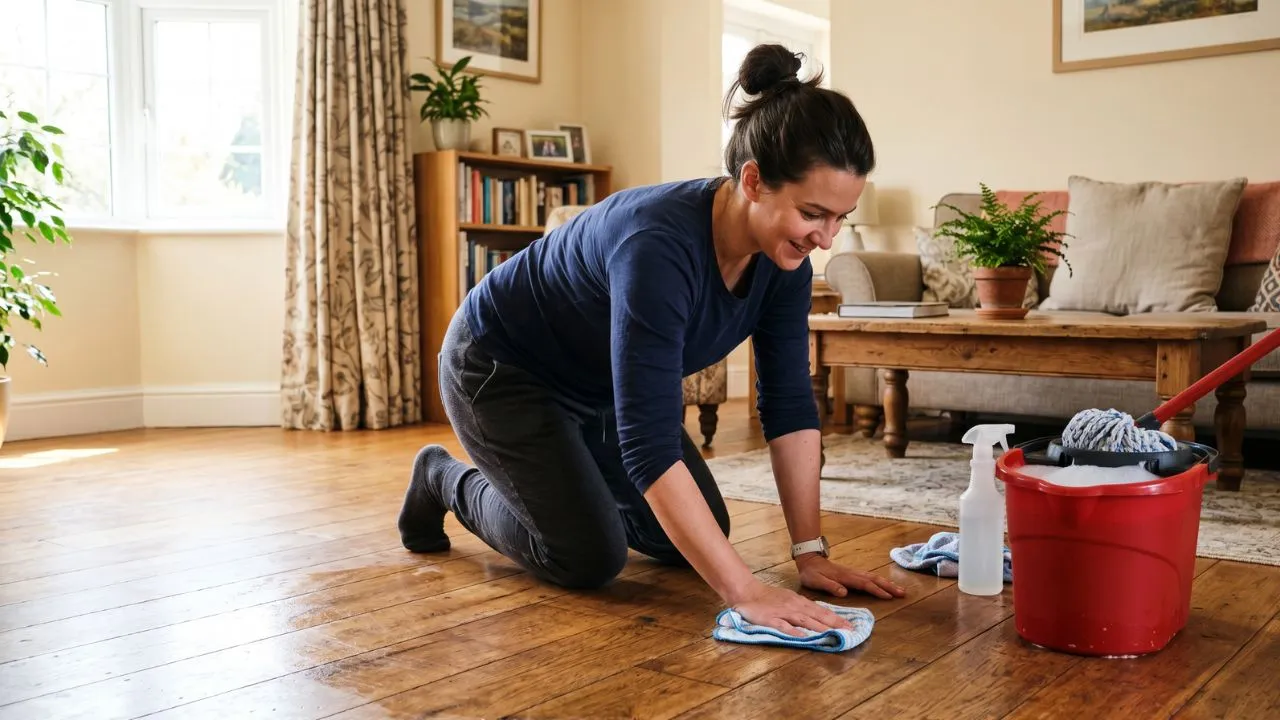
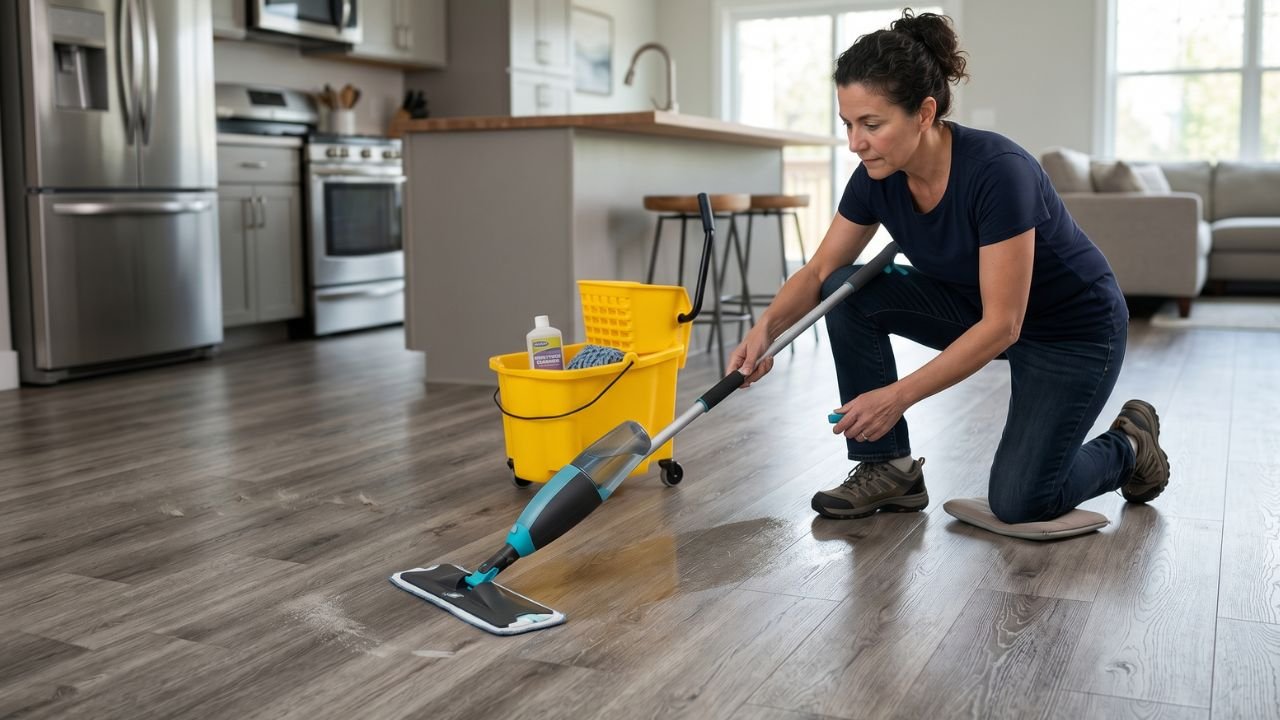
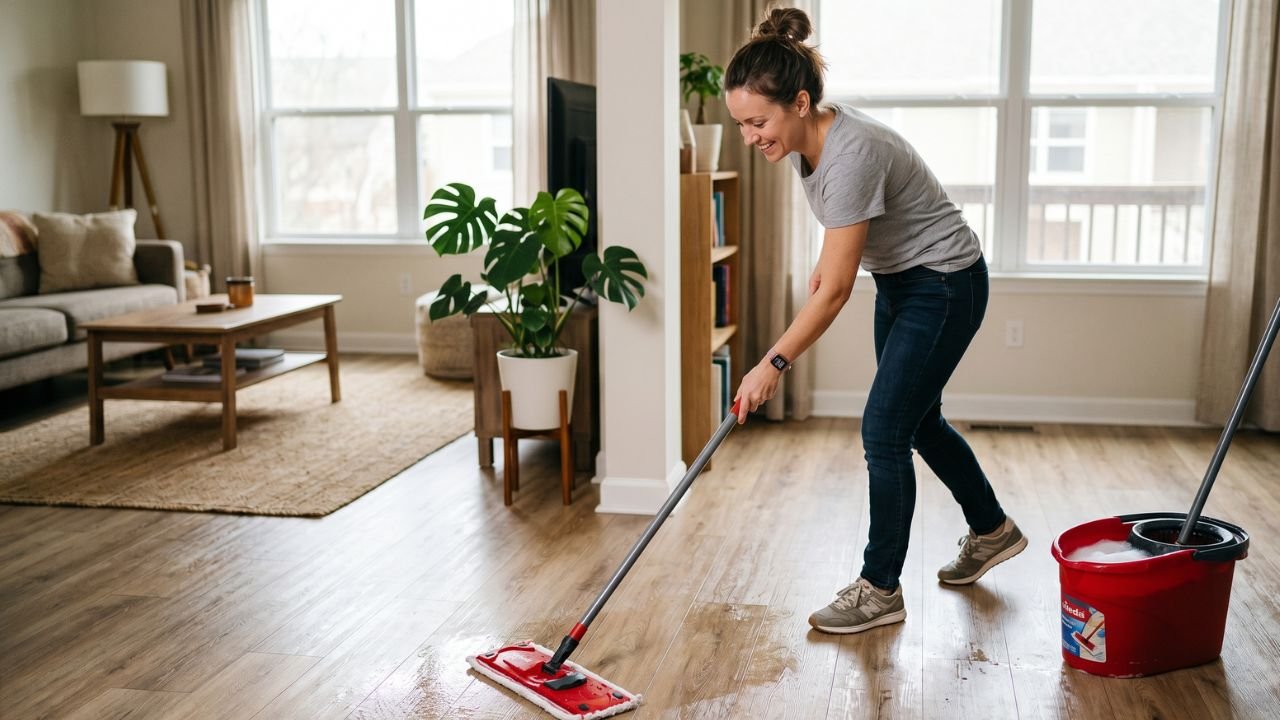
Step 2 — Mop in sections. Work in small sections across the floor. Use a damp — not soaking wet — microfiber mop. Wring it out well before each pass.
Step 3 — Rinse with clean water. Go over the entire floor again with a clean mop dampened with plain warm water. This removes any remaining cleaner and vinegar residue.
Step 4 — Dry thoroughly. Let the floor air dry or go over it with a dry microfiber cloth. Don't let water sit on the floor.
Step 5 — Repeat if necessary. Heavy buildup may require two or three rounds of this process. Be patient — it's worth getting the floor fully clean before switching to a proper maintenance routine.
What Should You Use on Vinyl Floors Instead?
Good news — vinyl floors are actually very easy to clean. You don't need fancy or expensive products. Here are the best options:
1. A pH-Neutral Vinyl Floor Cleaner
This is the gold standard. Products specifically formulated for vinyl and luxury vinyl floors are pH-neutral, residue-free, and won't damage the wear layer or finish.
Look for cleaners labeled specifically for vinyl, LVT, or LVP floors. Many major flooring brands make their own recommended cleaners — and most of them are affordable and widely available.
2. Diluted White Vinegar
A simple mixture of one cup of white vinegar per gallon of warm water is one of the most effective and safe cleaners for vinyl floors. It cuts through dirt and grime, leaves no residue, and costs almost nothing.
The mild acidity of vinegar neutralizes alkaline buildup without damaging the wear layer.
One note: Some manufacturers advise against vinegar on certain vinyl products over the long term, as repeated exposure to acidity can very gradually dull some finishes. Check your manufacturer's care guide to be sure. For most vinyl floors, occasional vinegar cleaning is perfectly fine.
3. Warm Water and a Few Drops of Dish Soap
For everyday cleaning, a bucket of warm water with just a couple drops of dish soap works well. Keep it very diluted — too much soap creates its own residue problem. Rinse with clean water after mopping.
4. Manufacturer-Recommended Cleaners
Whatever brand of vinyl floor you have, check their website or care guide for their recommended cleaning products. Using the manufacturer's recommended cleaner is always the safest choice for your warranty and your floor's longevity.
What to Avoid on Vinyl Floors
While we're on the topic, here's a full list of what NOT to use on vinyl tile or luxury vinyl floors:
Murphy's Oil Soap — Oil residue buildup and finish degradation.
Wax-based cleaners — Same residue problem as oil soap. Vinyl doesn't need wax and it builds up quickly.
Steam mops — The heat and moisture from steam mops can damage adhesive layers, cause seams to loosen, and warp planks over time. Most vinyl manufacturers explicitly prohibit steam mopping.
Bleach — Can discolor and degrade the vinyl surface and wear layer.
Ammonia-based cleaners — Too harsh for vinyl. Degrades the finish over time.
Abrasive scrubbers — Steel wool or rough scrubbing pads will scratch the wear layer.
Highly alkaline or acidic cleaners — pH extremes in either direction can damage vinyl floors over time.
Paste wax or polish — Vinyl floors have their own built-in sheen. Applying wax creates buildup and actually dulls the appearance.
The Right Cleaning Routine for Vinyl Floors
Keeping vinyl floors looking great is genuinely easy if you follow a simple routine:
Daily
Sweep or dry mop to remove loose dirt, dust, and grit. Sand and debris act like sandpaper on the wear layer with every footstep. Staying on top of this daily makes a noticeable difference in how long the floor looks new.
A microfiber dust mop is perfect for this — it picks up fine particles better than a traditional broom.
Weekly
Damp mop with a pH-neutral vinyl cleaner or a diluted vinegar solution. Use a microfiber mop wrung out until barely damp — never soaking wet. Excess water sitting on vinyl floors can work its way into seams and cause issues over time.
Monthly
Do a closer inspection. Check for any areas where dirt has built up in corners or along baseboards. Clean those areas with a soft brush and your floor cleaner.
As Needed
For sticky spills, act fast. Wipe up spills immediately with a damp cloth. Most spills clean up easily from vinyl if you get to them quickly. Let them sit and dry and they become harder to remove.
Does This Apply to All Types of Vinyl Floors?
Yes — the advice applies across all types of vinyl flooring:
Luxury Vinyl Tile (LVT) — Avoid Murphy's Oil Soap. Use pH-neutral cleaners.
Luxury Vinyl Plank (LVP) — Same recommendation. The wear layer on LVP is just as vulnerable to oil-based residue.
Sheet Vinyl — Murphy's Oil Soap is also not recommended here. Sheet vinyl has the same non-porous surface that doesn't absorb oil.
Peel-and-Stick Vinyl Tile — Especially important to avoid oil soaps here. Oil can actually weaken the adhesive backing and cause tiles to lift at the edges.
WPC and SPC Rigid Core Vinyl — Same rules apply. The surface wear layer on these premium products is susceptible to the same residue and finish degradation issues.
What About Murphy's Oil Soap on Other Floors?
Just to round things out — here's where Murphy's Oil Soap actually does belong:
Hardwood floors ✅ — This is what it was made for. Murphy's Oil Soap is excellent on sealed hardwood floors. It cleans effectively and the oil conditions the wood. However, check with your hardwood manufacturer first — some recommend against soap-based cleaners even on wood.
Wood furniture and cabinets ✅ — Great for cleaning and conditioning wood furniture, kitchen cabinets, and wood paneling.
Tile and grout ⚠️ — Can be used occasionally but may leave residue on grout over time. Not ideal for regular use.
Laminate floors ❌ — Not recommended. Same residue issues as vinyl, plus laminate is sensitive to moisture.
Ceramic or porcelain tile ⚠️ — Occasional use is generally fine but can dull grout over time with regular use.
Quick Reference Summary
Question | Answer |
|---|---|
Can you use Murphy's Oil Soap on vinyl floors? | Not recommended |
Will one use damage vinyl floors? | Unlikely |
Does regular use cause damage? | Yes — residue buildup and finish dullness |
Can it void your warranty? | Yes — check your manufacturer's guide |
Is it a slip hazard? | Yes — oily residue can make floors slippery |
What should you use instead? | pH-neutral vinyl floor cleaner or diluted white vinegar |
Can you remove existing buildup? | Yes — with diluted vinegar and dish soap solution |
Bottom Line
Murphy's Oil Soap is a genuinely good product — just not for vinyl floors. The oil-based formula leaves a residue that dulls your finish, attracts dirt, creates a slip hazard, and can gradually degrade the protective wear layer that keeps your vinyl looking great.
Stick to pH-neutral cleaners specifically formulated for vinyl floors, or keep it simple with a diluted vinegar solution. Your floors will stay cleaner, look better, and last longer.
Save the Murphy's for your hardwood and wood furniture — that's where it truly shines.