
Your hardwood floors have seen better days. Maybe they're scratched up from years of foot traffic. Maybe the finish is dull and lifeless. Maybe there are stains that mopping just won't fix anymore.
Refinishing hardwood floors brings them back to life — and for a lot less than replacing them entirely. But before you call a contractor, you want to know what you're getting into financially.
This guide breaks down the cost of refinishing wood floors in the United States, United Kingdom, and Canada — with everything that affects the final price so you can plan your budget properly.
What Does Refinishing Wood Floors Actually Mean?
Before we get into numbers, let's clarify what refinishing actually involves — because a lot of people confuse it with resurfacing, recoating, or replacing.
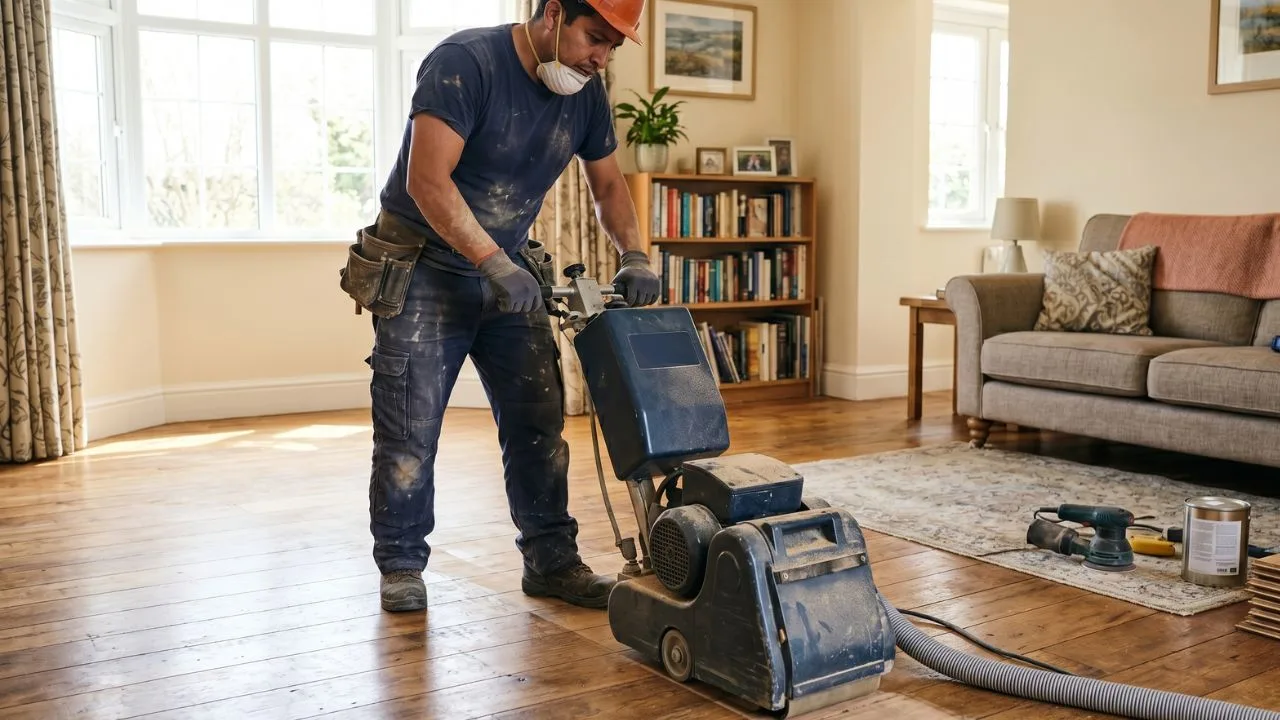
Refinishing means sanding the floor down to bare wood — removing the old finish, stains, and surface scratches — and then applying a brand new stain and finish coat from scratch. It's a full reset for your floors.
Recoating is less intensive. It involves lightly scuffing the existing finish and applying a new topcoat over it. It's cheaper and faster but only works if the existing finish is still in decent shape.
Replacing means tearing out the old floor entirely and installing new hardwood. Most expensive option by far.
This blog focuses on full refinishing — the most comprehensive and most commonly searched option.
How Much Does It Cost to Refinish Wood Floors in the USA?
National Average
In the United States, hardwood floor refinishing typically costs between $3 and $8 per square foot for professional work. Most homeowners spend between $1,000 and $2,500 for an average-sized project.
Here's a breakdown by project size:
Room Size | Estimated Cost (USA) |
|---|---|
Small room (100 – 200 sq ft) | $300 – $1,000 |
Medium room (200 – 500 sq ft) | $700 – $2,500 |
Large room (500 – 800 sq ft) | $1,500 – $4,000 |
Whole home (1,000 – 2,000 sq ft) | $3,000 – $8,000 |
Whole home (2,000+ sq ft) | $6,000 – $16,000+ |
Cost by City and Region
Location plays a big role in what you'll pay. Labor costs vary significantly across the country:
City / Region | Average Cost Per Sq Ft |
|---|---|
New York City, NY | $5 – $10 |
Los Angeles, CA | $4 – $9 |
Chicago, IL | $4 – $8 |
Houston, TX | $3 – $6 |
Miami, FL | $3 – $7 |
Seattle, WA | $4 – $9 |
Atlanta, GA | $3 – $6 |
Denver, CO | $3 – $7 |
Rural Midwest / South | $2.50 – $5 |
Major metropolitan areas consistently run higher than rural areas — sometimes double the cost for the same job.
What's Included in the USA Price?
Most professional quotes in the US include:
Sanding (typically three passes — coarse, medium, fine grit)
Edge sanding along walls and in corners
Stain application (if requested)
Two to three coats of finish (polyurethane, oil-based, or water-based)
Basic cleanup
What's usually not included:
Furniture moving (often $25 – $50 per room extra)
Repairs to damaged boards (typically $5 – $15 per board)
Squeaky floor repairs
Stair refinishing (usually priced separately per step — around $25 – $75 per step)
Baseboards or trim removal
Additional Costs to Know About in the USA
Stain color: Adding a stain color is usually an extra $1 – $2 per square foot. If you want a custom or specialty stain — gray tones, whitewashed looks, ebonized finishes — expect to pay more.
Finish type: Water-based finishes are more expensive than oil-based — typically $1 – $2 per square foot more — but they dry faster and have lower VOC emissions.
Dustless sanding: Many contractors now offer dustless sanding systems that contain most of the dust generated during sanding. This upgrade usually adds $0.50 – $1.50 per square foot but is worth it for occupied homes.
Minimum charges: Most contractors have a minimum charge of $200 to $500 regardless of project size. Very small jobs — a single small room — may not be economical to hire out.
How Much Does It Cost to Refinish Wood Floors in the UK?
National Average
In the United Kingdom, hardwood floor refinishing costs between £15 and £35 per square metre for professional work. Most homeowners spend between £500 and £2,500 depending on the size of the area.
Here's a breakdown by project size:
Room Size | Estimated Cost (UK) |
|---|---|
Small room (10 – 20 m²) | £200 – £600 |
Medium room (20 – 40 m²) | £500 – £1,400 |
Large room (40 – 60 m²) | £1,000 – £2,100 |
Whole home (100 m²) | £1,800 – £4,000 |
Whole home (150 m²+) | £3,000 – £6,500+ |
Cost by City and Region in the UK
As in the US, location matters enormously in the UK:
City / Region | Average Cost Per m² |
|---|---|
London (Central) | £30 – £55 |
London (Outer) | £25 – £45 |
Manchester | £18 – £35 |
Birmingham | £16 – £32 |
Edinburgh | £18 – £35 |
Bristol | £18 – £34 |
Leeds | £15 – £30 |
Cardiff | £14 – £28 |
Rural England / Wales | £12 – £25 |
London pricing is in a league of its own — central London rates can be double or even triple what you'd pay in rural areas.
What's Included in the UK Price?
UK floor refinishing quotes typically include:
Full sanding (multiple passes)
Edge sanding
Gap filling with flexible wood filler (sometimes included, sometimes extra)
Two to three coats of lacquer, oil, or hardwax oil finish
Basic debris cleanup
What's typically not included in UK quotes:
VAT (Value Added Tax at 20%) — always confirm whether quotes include or exclude VAT
Furniture removal
Repairs to damaged or rotten boards
Stair refinishing (usually £15 – £30 per step)
Floor preparation for severely uneven surfaces
Types of Finish Available in the UK
The UK market has some differences from the US in terms of popular finish options:
Lacquer (Polyurethane) — The most durable and easiest to maintain. Creates a hard, glossy surface. Most popular for high-traffic areas.
Hardwax Oil — Extremely popular in the UK. Penetrates the wood rather than sitting on top. Creates a natural matte look. Easier to spot-repair than lacquer but requires more regular maintenance.
Danish Oil — A traditional finish that nourishes the wood. Less durable than lacquer but popular for period properties.
Water-Based Finish — Low odor, fast drying, increasingly popular. Slightly higher cost than oil-based.
VAT Considerations
This is important for UK homeowners. Most tradespeople quote prices excluding VAT. Always ask whether the quote includes VAT before comparing prices. A quote of £1,500 ex-VAT becomes £1,800 once 20% VAT is added.
How Much Does It Cost to Refinish Wood Floors in Canada?
National Average
In Canada, hardwood floor refinishing costs between $3 and $8 per square foot (CAD) for professional work — similar in range to the US but priced in Canadian dollars. Most Canadian homeowners spend between $1,200 and $3,500 CAD for a typical project.
Here's a breakdown by project size:
Room Size | Estimated Cost (CAD) |
|---|---|
Small room (100 – 200 sq ft) | $400 – $1,200 CAD |
Medium room (200 – 500 sq ft) | $900 – $2,500 CAD |
Large room (500 – 800 sq ft) | $1,800 – $4,500 CAD |
Whole home (1,000 – 2,000 sq ft) | $3,500 – $9,000 CAD |
Whole home (2,000+ sq ft) | $7,000 – $18,000+ CAD |
Cost by City and Province in Canada
City / Province | Average Cost Per Sq Ft (CAD) |
|---|---|
Toronto, ON | $5 – $10 CAD |
Vancouver, BC | $5 – $11 CAD |
Montreal, QC | $4 – $8 CAD |
Calgary, AB | $4 – $8 CAD |
Ottawa, ON | $4 – $8 CAD |
Edmonton, AB | $3.50 – $7 CAD |
Halifax, NS | $3 – $6 CAD |
Winnipeg, MB | $3 – $6 CAD |
Rural areas | $2.50 – $5 CAD |
Vancouver and Toronto are consistently the most expensive Canadian cities for floor refinishing — driven by high labor costs and strong demand in competitive real estate markets.
What's Included in Canadian Quotes?
Canadian floor refinishing quotes typically include:
Full sanding process
Edge and corner sanding
Stain application (if selected)
Two to three coats of finish
Basic cleanup
What's typically not included:
HST / GST / PST (taxes vary by province — typically 5% to 15%)
Furniture moving
Board repairs or replacements
Stair refinishing (usually $30 – $80 CAD per step)
Squeaky floor repairs
Tax Considerations in Canada
Canadian taxes on home services vary significantly by province:
Province | Tax Rate |
|---|---|
Ontario | 13% HST |
British Columbia | 12% PST + GST |
Alberta | 5% GST only |
Quebec | 14.975% QST + GST |
Nova Scotia | 15% HST |
Manitoba | 12% PST + GST |
Always confirm whether quotes include or exclude taxes. In Ontario for example a $2,000 quote becomes $2,260 after HST.
Canadian Climate Considerations
Canada's dramatic seasonal temperature and humidity changes affect hardwood floors significantly more than in the US or UK. Canadian flooring contractors often recommend:
Refinishing in spring or fall when humidity is most stable
Allowing extra acclimatization time for stain and finish in cold weather
Using finish products rated for high humidity fluctuation environments
These considerations can affect both the timeline and cost of your project.
Side-by-Side Cost Comparison
Here's how the three countries compare for a typical 300 square foot (approximately 28 square metre) room:
Country | Low Estimate | Mid Estimate | High Estimate |
|---|---|---|---|
USA | $900 USD | $1,500 USD | $2,400 USD |
UK | £420 GBP | £700 GBP | £980 GBP |
Canada | $1,050 CAD | $1,800 CAD | $2,700 CAD |
Note that these are rough equivalents and exchange rates fluctuate. The UK tends to run slightly lower in absolute terms for mid-range projects, while Canadian prices closely mirror US prices in their respective currencies.
What Factors Affect the Cost Everywhere?
Regardless of which country you're in, the same core factors drive the final price up or down:
1. Floor Area
The bigger the area, the more you pay in total — but the lower the cost per square foot or metre. Contractors can work more efficiently on large open areas and often offer better per-unit rates for bigger jobs.
2. Floor Condition
A floor in rough shape with deep scratches, gouges, stains, or uneven sections takes more sanding passes and more time. Expect to pay more for floors that need significant work before the new finish can be applied.
3. Wood Species
Different wood species have different hardness levels — measured on the Janka hardness scale. Harder woods like Brazilian cherry, hickory, or maple take longer to sand and require more abrasive materials. Softer woods like pine sand quickly but dent easily. Some exotic or antique species require specialized equipment and expertise.
4. Stain Color
A clear finish with no stain is the cheapest option. Adding a stain color costs more. Custom colors, specialty finishes like whitewash or ebonized black, or color-matching to existing areas all add to the price.
5. Finish Type
Oil-based polyurethane is the most affordable finish in most markets. Water-based finishes cost more but dry faster. Hardwax oil — popular in the UK and increasingly in North America — costs more per application but allows easier spot repairs later.
6. Number of Coats
Standard refinishing includes two to three finish coats. Some contractors offer four or five coats for high-traffic areas or commercial spaces at additional cost.
7. Repairs Needed
Damaged boards, wide gaps between planks, squeaky areas, and structural issues all add to the bill. Get a detailed quote that specifies what repairs are included and what will be charged extra.
8. Accessibility and Layout
Open-plan spaces are easier and cheaper to sand than rooms with lots of furniture, tight corners, built-in features, or irregular shapes. Stairs are always priced separately because they require different equipment and significantly more time per square foot.
9. Location and Season
Urban areas cost more than rural areas everywhere. Additionally, peak demand seasons — spring and early summer — sometimes carry higher prices due to contractor demand. Scheduling in fall or winter can occasionally get you a better rate.
DIY vs. Professional Refinishing — Is It Worth Doing Yourself?
This comes up a lot and deserves an honest answer.
DIY Refinishing Costs
Renting the equipment and buying the materials yourself costs significantly less than hiring a professional:
Item | USA (USD) | UK (GBP) | Canada (CAD) |
|---|---|---|---|
Drum sander rental (per day) | $60 – $100 | £50 – £80 | $70 – $120 |
Edge sander rental (per day) | $30 – $50 | £30 – £50 | $35 – $60 |
Sandpaper and supplies | $50 – $100 | £40 – £80 | $60 – $120 |
Stain (if desired) | $30 – $80 | £25 – £60 | $35 – $90 |
Finish / polyurethane | $60 – $150 | £50 – £120 | $70 – $170 |
Total DIY estimate | $230 – $480 | £195 – £390 | $270 – $560 |
That's a significant saving. On a 300 square foot room, DIY might cost you $400 compared to $1,500 professionally done.
The Real Cost of DIY
Those numbers look great on paper. But here's the honest reality:
Drum sanders are unforgiving. A professional-grade drum sander is a powerful machine that removes material fast. Stopping in one spot too long, moving too slowly, or running it at the wrong angle leaves permanent gouges and uneven sanding marks that are very difficult to fix.
Mistakes multiply. If you sand unevenly, apply stain blotchily, or rush the finish coats, fixing those mistakes requires sanding everything back down and starting over. Which costs more time and more rental days.
The learning curve is steep. Professionals refinish floors every day. They know exactly how many passes each wood species needs, how to feather in edge sanding seamlessly, and how to apply finish without lap marks or bubbles. First-timers almost always make mistakes that a professional wouldn't.
The dust is significant. Without a dustless system, floor sanding generates enormous amounts of fine wood dust that gets into everything — ductwork, furniture, electronics. Cleanup alone is a major undertaking.
When DIY Makes Sense
DIY refinishing can be a good choice if:
You're comfortable with tools and hands-on projects
The floor is in relatively good condition — not too many repairs needed
It's a low-stakes area where perfection isn't critical
You have time to do it properly and aren't rushing
You've watched multiple detailed tutorials and understand what you're getting into
When to Hire a Professional
Hire a professional if:
The floor is valuable or you care deeply about the result
The floor has significant damage or repairs needed
It's a large area or an open-plan space
You're planning to sell the home and need it done right
You've never done it before and don't have time to learn
How to Get the Best Price — Tips for All Three Countries
Get Multiple Quotes
Always get at least three quotes before choosing a contractor. Prices vary enormously between companies for the same job. Getting multiple quotes also helps you spot outliers — both suspiciously cheap and unreasonably expensive.
Ask What's Included
Make sure every quote covers the same scope of work. One contractor's $1,500 quote might include staining while another's doesn't. Compare apples to apples.
Ask About the Dustless Upgrade
If you're living in the home during the project, paying extra for dustless sanding is absolutely worth it. Ask every contractor if they offer it.
Schedule in the Off-Season
Late fall and winter are slower periods for most flooring contractors. You may be able to negotiate a better rate during these times.
Bundle Multiple Rooms
Refinishing multiple rooms in one visit is more cost-effective than doing them separately. Contractors can price larger jobs more aggressively since setup and cleanup only happens once.
Check Reviews and References
The cheapest quote isn't always the best value. Look for contractors with strong reviews, before-and-after photos of their work, and ideally references from previous customers in your area.
Verify Insurance and Licensing
In all three countries, make sure your contractor is properly insured. Floor refinishing generates dust, uses chemical finishes, and involves heavy equipment. If something goes wrong — a fire from finish fumes, damage to the property — you want to know you're covered.
How Long Does Floor Refinishing Take?
Timeline varies by project size but here's a general guide:
Project Size | Typical Timeline |
|---|---|
Single room | 2 – 3 days |
2 – 3 rooms | 3 – 5 days |
Whole home (small) | 5 – 7 days |
Whole home (large) | 7 – 14 days |
The timeline includes sanding, staining (if applicable), and multiple finish coats with drying time between each. Water-based finishes dry faster than oil-based — sometimes cutting the total timeline by a day or two.
You generally cannot walk on the floors for 24 to 48 hours after the final coat. Full cure time — when the finish reaches maximum hardness — is typically 7 to 14 days. During that curing period, avoid placing rugs, moving heavy furniture, or wearing shoes on the floor.
Is Refinishing Worth It vs. Replacing?
Almost always yes — if the floors are structurally sound.
Here's a rough comparison for a 500 square foot area:
Option | USA Cost | UK Cost | Canada Cost |
|---|---|---|---|
Refinishing | $1,500 – $3,500 USD | £750 – £1,750 GBP | $1,800 – $4,000 CAD |
New hardwood installation | $6,000 – $12,500 USD | £3,500 – £9,000 GBP | $7,000 – $15,000 CAD |
Refinishing costs roughly 25% to 40% of full replacement in all three markets. And the result — freshly sanded and finished original hardwood — often looks just as good or better than new flooring.
The exception is when floors are too thin to sand again (usually after three or more previous refinishes), structurally damaged, or have boards that need widespread replacement. In those cases, full replacement may be the better long-term investment.
Bottom Line
Refinishing hardwood floors is one of the best value home improvement projects you can do — in the US, UK, or Canada. It transforms worn, tired floors into something beautiful again at a fraction of the cost of replacement.
In the USA, budget $3 – $8 per square foot. In the UK, plan for £15 – £35 per square metre. In Canada, expect $3 – $8 per square foot CAD. All three markets see significant variation based on location, floor condition, and the contractor you choose.
Get multiple quotes. Ask detailed questions. Understand what's included. And don't just go with the cheapest option — your floors are a long-term investment and getting the job done right the first time is always worth it.