
You made a great choice going with engineered wood floors. They look beautiful, feel warm underfoot, and add real character to any room. But now comes the part nobody really talks about when you're shopping for floors — how do you actually keep them clean without ruining them?
Engineered wood is not the same as solid hardwood. And it's definitely not the same as vinyl or laminate. It has its own specific needs, its own sensitivities, and its own cleaning rules. Use the wrong product or the wrong method and you can seriously damage a floor that cost you thousands of dollars.
This guide covers everything — daily habits, weekly routines, deep cleaning, stain removal, and the products you should never touch your engineered wood floors with.
First — What Makes Engineered Wood Different?
Understanding what engineered wood is made of helps explain why it needs to be cleaned a certain way.
Engineered hardwood is built in layers. The top layer — called the veneer — is real hardwood. This is the layer you see and walk on every day. Beneath it are multiple layers of plywood or high-density fiberboard (HDF) stacked in alternating directions for stability.
That real wood veneer on top looks gorgeous but it has one important characteristic you need to respect — it doesn't like excessive moisture.
Unlike vinyl or ceramic tile, wood absorbs water. Too much moisture can cause the veneer to swell, warp, buckle, or separate from the layers beneath it. This is why the cleaning approach for engineered wood is all about using the right amount of moisture — which is very little.
The other thing to know is that engineered wood has a finish — usually aluminum oxide or urethane — that protects the veneer from scratches and stains. Harsh chemicals and abrasive tools can strip that finish and leave the wood vulnerable.
Clean it right and engineered wood floors look stunning for decades. Clean it wrong and you're looking at expensive repairs or replacement.
What You'll Need
Before getting into the routines, here's what belongs in your engineered wood floor cleaning kit:
For daily and weekly cleaning:
Microfiber dust mop or soft-bristle broom
Vacuum with a hard floor setting (beater bar turned off)
Microfiber flat mop
Spray bottle
pH-neutral engineered wood floor cleaner or hardwood floor cleaner
Warm water
For stain removal:
Clean white cloths or microfiber cloths
Rubbing alcohol (for certain stains)
Mineral spirits (for tough spots)
Ice pack (for wax or gum)
What to avoid entirely:
Steam mops
Wet mops or string mops
Murphy's Oil Soap or oil-based cleaners
Vinegar or citrus-based cleaners
Bleach or ammonia
Abrasive scrubbers
Paste wax or polish
We'll get into why each of these is a problem a little later.
Daily Cleaning — The Habits That Protect Your Floors
The best thing you can do for engineered wood floors is develop a few simple daily habits. Most floor damage doesn't happen from one big incident — it happens gradually through everyday neglect.
Sweep or Dust Mop Every Day
Dirt, dust, sand, and grit are the silent enemies of engineered wood floors. Every time someone walks across the floor, those tiny particles get ground against the finish — acting like sandpaper with every footstep.
A quick pass with a microfiber dust mop takes two minutes and makes a huge difference in how long your floors look new. Microfiber is ideal because it traps and holds particles rather than just pushing them around.
A soft-bristle broom works too — just make sure it's genuinely soft. Stiff bristles can scratch the finish over time.
Clean Up Spills Immediately
Engineered wood and standing water are not friends. Any liquid left on the surface — water, juice, coffee, wine — starts to absorb into the wood veneer almost immediately.
Keep a microfiber cloth handy in the kitchen and anywhere drinks are common. When something spills, wipe it up right away. Blot — don't rub — to absorb the liquid. Then dry the area completely with a clean dry cloth.
Even small amounts of water left to dry on their own can leave white haze marks or cause the veneer to raise slightly over time.
Use Doormats and Area Rugs
Place doormats at every exterior entry point. They catch the dirt, grit, and moisture that come in on shoes before it ever reaches your floors.
Area rugs in high-traffic zones — hallways, in front of the kitchen sink, under dining tables — protect the finish where foot traffic is heaviest.
One important note: make sure rugs have a felt or non-slip backing rather than a rubber backing. Some rubber backings trap moisture against the floor and can discolor the finish over time.
No Shoes Policy
This one makes a bigger difference than most people expect. Shoes — especially hard-soled shoes and heels — concentrate a lot of weight and grit onto small points of contact. High heels in particular can dent engineered wood veneer.
A simple shoe rack at the door and a household no-shoes rule will noticeably extend the life of your floors.
Weekly Cleaning — The Proper Mopping Routine
Once a week, your engineered wood floors need a proper damp clean to remove the buildup that sweeping can't get.
The key word is damp — not wet. This is the most important distinction in cleaning engineered wood floors. Your mop should be wrung out to the point of being barely moist. If you press your hand against the mop pad and it leaves a wet mark, it's too wet.
Here's the full weekly routine:
Step 1 — Vacuum or Dust Mop First
Before any wet cleaning, remove all loose dirt and debris from the surface. If you mop without doing this first, you end up pushing grit around and grinding it into the finish.
If you're vacuuming, use a hard floor setting and make absolutely sure the beater bar or rotating brush is turned off. A spinning brush roll is designed for carpet — on hardwood or engineered wood it scratches the finish.
Step 2 — Choose the Right Cleaner
This is critical. Use a cleaner specifically formulated for engineered hardwood or hardwood floors. Look for products that are:
pH neutral — neither acidic nor alkaline
Residue-free — won't leave a film or buildup
No-rinse formula — designed to dry clean
Recommended products that work well on engineered wood:
Bona Hardwood Floor Cleaner — One of the most widely recommended by flooring professionals. pH neutral, residue-free, and safe for engineered wood. Available at most hardware stores.
Method Squirt and Mop Wood Floor Cleaner — Plant-based, pH neutral, and leaves a clean finish without buildup.
Shaw Floors Hardwood and Laminate Cleaner — Made by one of the largest flooring manufacturers. Safe for engineered wood.
Zep Hardwood and Laminate Floor Cleaner — Budget-friendly and widely available.
Always check that the product specifically says it's safe for engineered hardwood. Some hardwood cleaners contain ingredients that are fine for solid hardwood but too harsh for engineered wood's thinner veneer.
Step 3 — Apply the Cleaner Sparingly
The best method for engineered wood is to spray the cleaner directly onto the floor in small sections rather than soaking the mop head. A few light spritzes cover a 3x3 foot area without saturating the surface.
Work in sections — spray, mop, move forward. Never pour cleaner directly onto the floor.
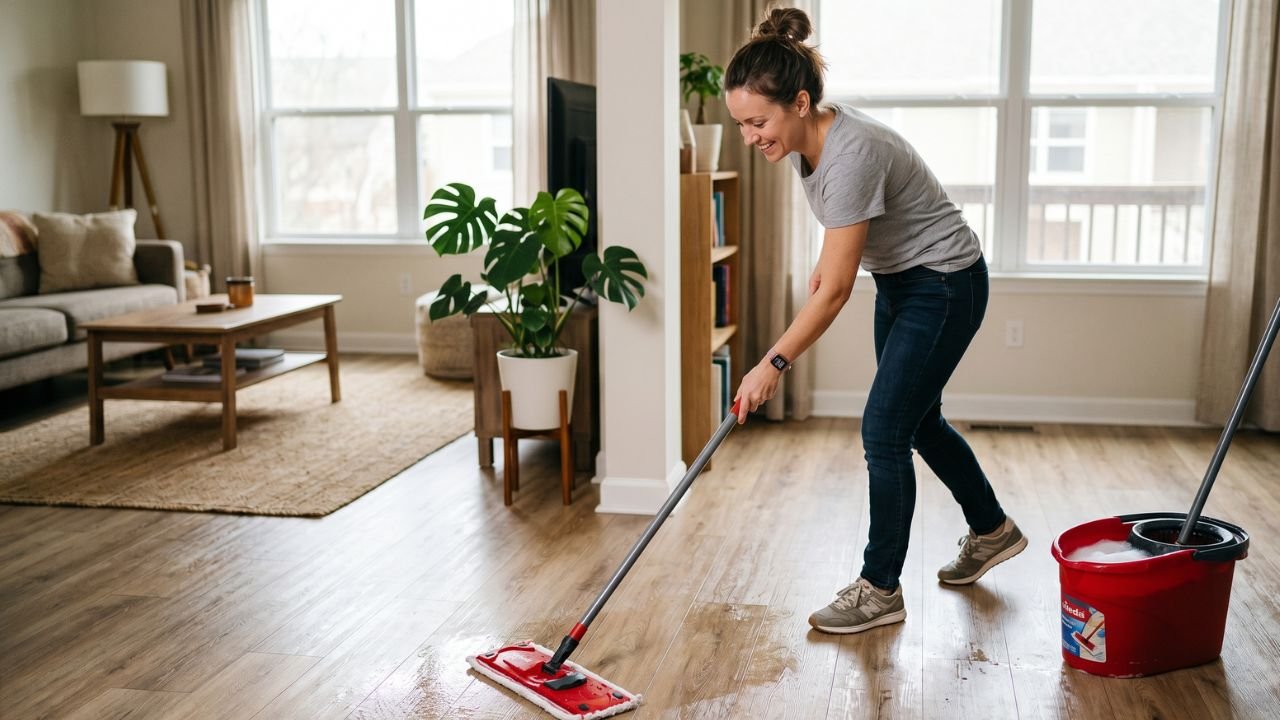
Step 4 — Mop With a Microfiber Flat Mop
A microfiber flat mop is the ideal tool for engineered wood. The flat head gives good surface coverage, the microfiber picks up dirt effectively, and it holds very little moisture.
Mop in the direction of the wood grain — this follows the natural lines of the planks and cleans more effectively than mopping against the grain.
Use light, overlapping passes. Don't scrub hard — let the cleaner do the work.
Step 5 — Let It Air Dry
Engineered wood floors cleaned with the right amount of moisture should dry almost immediately — within a minute or two at most. If your floor is staying wet for longer than that, your mop is too wet.
Don't walk on the floor until it's fully dry. Don't put rugs or furniture back until dry.
Deep Cleaning — When Regular Mopping Isn't Enough
Even with a solid weekly routine, engineered wood floors eventually need a deeper clean. Buildup from cleaning products, foot traffic oils, and general grime can accumulate on the surface and leave the floor looking dull even after mopping.
Plan on a deep clean every one to three months depending on foot traffic.
How to Deep Clean Engineered Wood Floors
What you'll need:
Engineered hardwood floor cleaner
Microfiber flat mop with a clean pad
Soft-bristle brush or old toothbrush for edges and corners
Clean microfiber cloths
Warm water
Step 1: Thoroughly vacuum the entire floor. Pay attention to corners, edges, and the gaps between planks where debris accumulates.
Step 2: Mix your floor cleaner per the manufacturer's instructions. For deep cleaning you can use a slightly stronger concentration than for regular mopping — but still within the recommended range.
Step 3: Work in small sections — about 4x4 feet at a time. Apply the cleaner and let it sit for 30 to 60 seconds to loosen buildup before mopping.
Step 4: Mop each section thoroughly, rinsing and wringing your mop pad frequently. A dirty mop pad just moves grime around.
Step 5: For stubborn areas where buildup is heavier, use a clean microfiber cloth and gently scrub in the direction of the grain with a little extra cleaner. Never use abrasive scrubbers.
Step 6: Go over the entire floor one more time with a clean damp mop pad to remove any remaining cleaner residue.
Step 7: Allow to dry completely before walking on or replacing rugs and furniture.
How to Remove Common Stains From Engineered Wood
Stains happen. Here's how to handle the most common ones without damaging your floors:
Water Stains and White Haze
White cloudy marks are usually caused by moisture sitting on the surface. For fresh white haze, dry the area completely and rub gently with a dry microfiber cloth — it often disappears on its own as the floor dries fully.
For more stubborn white haze, a small amount of mineral spirits on a soft cloth rubbed gently in the direction of the grain can help. Test in an inconspicuous area first.
Grease or Oil Stains
Apply a small amount of dish soap directly to a damp cloth — not to the floor — and gently work it into the stain in circular motions. Wipe clean with a damp cloth and dry thoroughly.
Scuff Marks
Light scuff marks from shoes often come off easily with a clean pencil eraser or a tennis ball rubbed gently over the mark. For tougher scuffs, a small amount of baking soda on a damp cloth works well — rub gently, then wipe clean.
Ink or Marker
Dampen a clean white cloth with rubbing alcohol and gently blot the stain. Don't rub — blotting lifts the ink without spreading it. Work from the outside of the stain inward. Wipe the area clean with a damp cloth afterward and dry completely.
Wine or Juice
Act fast. Blot up as much liquid as possible with a clean dry cloth immediately. Then clean the area with your engineered wood floor cleaner and dry thoroughly. If a stain remains after drying, a small amount of hydrogen peroxide on a cloth can help — test in a hidden spot first as it can lighten some wood finishes.
Wax or Gum
Harden the wax or gum first by holding an ice pack against it for several minutes. Once brittle, carefully scrape it off with a plastic scraper — never metal, which will scratch the finish. Clean any residue with mineral spirits on a soft cloth, then clean the area with your regular floor cleaner.
Pet Stains
Clean up pet accidents immediately. Urine is particularly damaging to wood floors — the acid and ammonia content can stain and damage the finish quickly. Blot up as much as possible, then clean with an enzymatic cleaner specifically designed for hardwood floors. These break down the organic compounds that cause odor and staining.
Cleaning Products to Avoid — And Why
This is worth its own section because using the wrong product is the number one cause of damage to engineered wood floors.
Steam Mops
Steam mops force hot steam deep into the wood. Heat and moisture together are the worst combination for engineered wood — they cause the veneer to swell, the layers to separate, and the finish to bubble. Most engineered wood manufacturers explicitly void warranties if steam mops are used. Never use a steam mop on engineered wood floors.
Murphy's Oil Soap
As we covered in detail in our previous blog — Murphy's Oil Soap is oil-based and formulated for solid wood. On engineered wood it leaves an oily residue that builds up on the finish, dulls the appearance, creates a slippery surface, and gradually degrades the protective coating.
Vinegar or Citrus Cleaners
White vinegar is acidic. Repeated use on engineered wood gradually eats away at the urethane or aluminum oxide finish. Once the finish is compromised, the wood veneer is vulnerable to moisture, staining, and scratching. Despite being a popular DIY cleaning solution, vinegar is not recommended for engineered wood by any major flooring manufacturer.
Ammonia-Based Cleaners
Ammonia is highly alkaline and strips the finish from engineered wood over time. Many glass cleaners contain ammonia — keep them away from your floors.
Bleach
Bleach discolors wood and destroys the finish. Even diluted bleach is too harsh for engineered wood surfaces.
Wax-Based Products
Engineered wood floors come pre-finished from the factory. Applying wax or polish creates a buildup layer that dulls the natural sheen, attracts dirt, and is very difficult to remove. Leave the wax for antique furniture.
Wet Mops and String Mops
Traditional string mops hold way too much water for engineered wood. Even a well-wrung string mop leaves more moisture on the surface than engineered wood can safely handle over time.
Seasonal Care and Humidity Control
Here's something most people don't think about — humidity affects your engineered wood floors year-round.
Wood expands in high humidity and contracts in low humidity. Engineered wood handles humidity fluctuations much better than solid hardwood, but it still has limits.
The ideal indoor humidity range for engineered wood floors is 35% to 55% relative humidity.
In winter: Heating systems dry out indoor air significantly. Low humidity causes engineered wood planks to contract and develop small gaps between boards. A whole-home humidifier or portable humidifier in rooms with wood floors helps maintain proper moisture levels.
In summer: High humidity causes wood to expand. In very humid climates or during humid summers, running air conditioning or a dehumidifier keeps humidity in the safe range.
A simple digital hygrometer — available for under $15 at hardware stores — lets you monitor indoor humidity levels easily.
Protecting Your Floors Beyond Cleaning
Good cleaning habits are important but protecting your floors in the first place reduces how much heavy cleaning you need to do.
Furniture pads: Put felt pads under every piece of furniture. Chairs, tables, sofas — everything. Dragging furniture without pads scratches the finish badly. Check pads every few months and replace them when they wear thin.
Piano and appliance casters: Heavy items with small casters concentrate enormous weight on tiny points. Use wide furniture cups or coasters under piano legs, refrigerators, and washing machines.
Pet nails: Keep pet nails trimmed. Long dog nails scratch engineered wood finish with every step. This is one of the most common causes of surface scratching in homes with dogs.
Sunlight and UV: Direct sunlight fades and discolors wood over time. Use curtains, blinds, or UV-filtering window film in rooms where sunlight falls directly on the floor for extended periods.
Avoid high heels: Stiletto heels can dent engineered wood veneer. This is worth mentioning to guests if you're particularly protective of your floors.
How Often Should You Clean Engineered Wood Floors?
Here's a simple maintenance schedule to follow:
Task | Frequency |
|---|---|
Dust mop or sweep | Daily or every other day |
Vacuum (hard floor setting) | 2 – 3 times per week |
Damp mop with floor cleaner | Weekly |
Deep clean | Every 1 – 3 months |
Check and replace furniture pads | Every 6 months |
Inspect finish condition | Annually |
Professional recoat (if needed) | Every 3 – 5 years |
Can You Refinish Engineered Wood Floors?
This comes up a lot and it's worth addressing briefly.
Unlike solid hardwood — which can be sanded and refinished many times — engineered wood has a limited refinishing capacity. It depends on the thickness of the veneer:
Thin veneer (1–2mm): Usually cannot be refinished at all
Medium veneer (2–4mm): Can typically be lightly sanded and refinished once
Thick veneer (4–6mm): Can often be refinished two or three times
This is why protecting the finish through proper cleaning and maintenance is so important. The better you maintain the existing finish, the longer you go before refinishing is needed — and the more refinishing cycles you have available over the life of the floor.
Signs Your Engineered Wood Floor Needs Professional Attention
Good maintenance prevents most problems, but here are signs that your floor needs more than a cleaning:
Finish is visibly worn through in high-traffic areas
Planks are cupping — edges curling up — indicating moisture issues
Planks are buckling or lifting from the subfloor
Deep scratches that go through the finish into the veneer
Persistent dull appearance that doesn't improve after cleaning
Gaps between planks that weren't there before
For finish issues, a professional recoat can restore the protective layer without sanding. For structural issues like cupping and buckling, a flooring professional needs to identify and address the moisture source.
Bottom Line
Cleaning engineered wood floors the right way comes down to three things — use the right products, use the right amount of moisture, and stay consistent with your routine.
Sweep daily. Damp mop weekly with a pH-neutral hardwood floor cleaner. Deep clean every few months. Clean up spills immediately. Keep humidity in the right range. And stay far away from steam mops, vinegar, oil soaps, and anything abrasive.
Do those things consistently and your engineered wood floors will look stunning for decades. Neglect them — or clean them with the wrong products — and you'll be dealing with dull, damaged floors long before their time.
It's one of those areas of homeownership where a few minutes of the right effort every week pays off in a big way over the long run.